POSE-2 Double Helix: The Next Generation of Non-Surgical Weight Loss
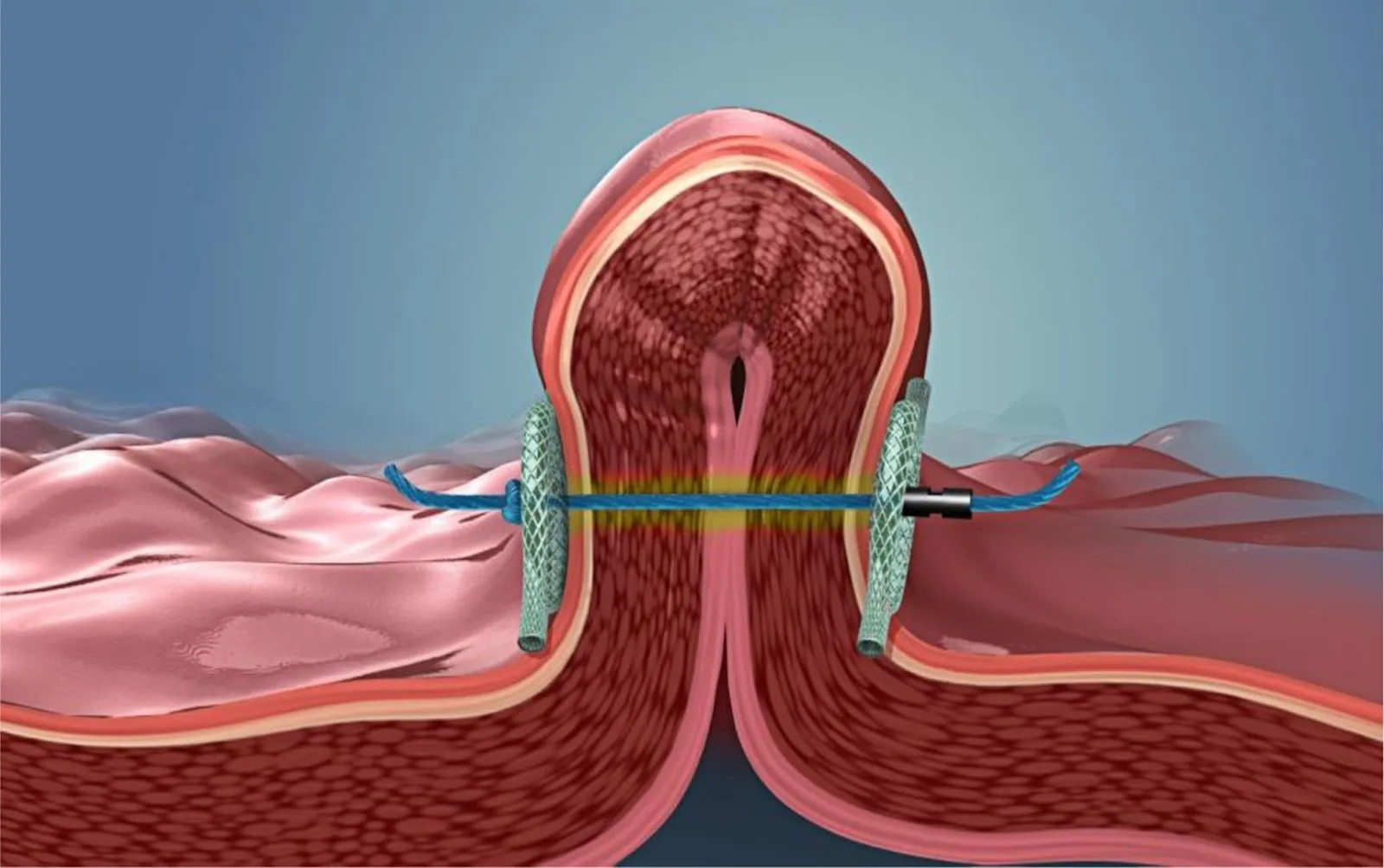
POSE-2 Double Helix: The Next Generation of Non-Surgical Weight Loss
Are you struggling with obesity but hesitant about surgery? The POSE-2 Double Helix (Primary Obesity Surgery Endoluminal, second generation) may be exactly what you have been looking for: a scar-free, incision-free procedure that reshapes your stomach from the inside — through the mouth — and helps you lose 15-20% of your total body weight.
Obesity now affects more than one billion people worldwide and drives type 2 diabetes, heart disease, fatty liver, sleep apnea, and joint problems. Diet and exercise alone fail for most people with a BMI above 30 — not because of willpower, but because of biology. Bariatric surgery works, yet many patients never take that step because they fear the operating room. POSE-2 was designed precisely for this gap: surgical-scale results without surgery.
POSE-2 at a glance: no incisions • no scars • ~45-60 minute procedure • same-day or 1-night discharge • back to work in 1-3 days • 15-20% total body weight loss
Watch: How POSE-2 Double Helix Works
From POSE to POSE-2: What Changed?
The original POSE procedure, introduced over a decade ago, folded tissue mainly in the upper stomach (the fundus). It worked, but results faded for some patients. The second-generation POSE-2 "Double Helix" technique is fundamentally different: using an endoscopic platform inserted through the mouth, the physician places full-thickness plications along the greater curvature of the gastric body in a helical (spiral) pattern. This both narrows and shortens the stomach — reducing its functional volume by up to 70% — and creates a durable, tube-like shape that closely mimics a surgical sleeve.
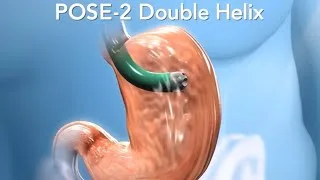
Because the plications pass through the full thickness of the stomach wall and are secured with special anchor pairs, they heal into permanent tissue bridges — the key to long-lasting restriction. The image below shows a single full-thickness plication held by two anchors:
POSE-2 Key Facts
| Feature | POSE-2 Double Helix |
|---|---|
| Approach | Fully endoscopic (through the mouth) — no incisions, no scars |
| Procedure time | Approximately 45-60 minutes under general anesthesia |
| Hospital stay | Same-day discharge or 1 night |
| Recovery | Back to normal activities in 1-3 days |
| Stomach volume reduction | Up to 70% (narrowed and shortened) |
| Expected weight loss | 15-20% of total body weight in 12 months |
| Ideal candidate | BMI 28-40 (also selected revision cases) |
What Do the Clinical Studies Show?
POSE-2 is not experimental — it is backed by prospective clinical research conducted with the same FDA-cleared endoscopic platform:
| Outcome | Reported Result |
|---|---|
| Total body weight loss at 6 months | ~13-15% |
| Total body weight loss at 12 months | 15-20% |
| Excess weight loss at 12 months | ~45-50% |
| Technical success rate | ~98-100% |
| Serious adverse events | <1% |
Beyond the numbers on the scale, patients in these studies also showed meaningful improvements in blood sugar control, blood pressure, cholesterol, and fatty liver markers — the metabolic benefits that truly change long-term health.
POSE-2 vs ESG vs Gastric Sleeve: Which Is Right for You?
| POSE-2 Double Helix | ESG | Gastric Sleeve | |
|---|---|---|---|
| Incisions | None | None | Laparoscopic (keyhole) |
| Stomach tissue removed | No | No | Yes (~80%, irreversible) |
| Typical BMI range | 28-40 | 30-40 | 35+ |
| Total body weight loss | 15-20% | 15-18% | 25-30% |
| Hospital stay | 0-1 night | 1-2 nights | 3-4 nights |
| Return to work | 1-3 days | 1-3 days | 2-3 weeks |
In short: if your BMI is between 28 and 40 and you want a scar-free procedure with a fast return to daily life, POSE-2 is one of the strongest options available today. If your BMI is above 40, a surgical option such as the gastric sleeve or mini gastric bypass usually delivers better long-term results.
Advantages of POSE-2 Double Helix
- No incisions, no scars — the entire procedure is performed through the mouth
- Full-thickness, durable plications designed for long-lasting restriction
- Lower complication risk than surgical alternatives (<1% serious adverse events in studies)
- Rapid recovery — same-day or next-day discharge, normal activities within days
- Stomach anatomy is preserved — no tissue is removed
- Works with your biology — earlier fullness, slower gastric emptying, reduced hunger signals
What Is Recovery Like?
Most patients go home the same day or the next morning. Mild cramping, nausea, or a sore throat can occur for 24-72 hours and is managed with routine medication. You will follow a staged diet — liquids for the first days, then soft foods, then regular healthy meals — guided by our dietitian team for a full 12 months. There are no wound dressings, no stitches to remove, and no scar care.
Am I a Candidate?
POSE-2 may be right for you if:
- Your BMI is between 28 and 40
- You have not achieved lasting results with diet, exercise, or weight loss medication
- You want to avoid surgery, or surgery is not suitable for you
- You are committed to long-term lifestyle change with professional support
POSE-2 in Istanbul: Experience Matters
Endoscopic bariatric procedures are highly technique-dependent — outcomes track directly with the endoscopist's experience. At Istanbul Bariatric Center, POSE-2 Double Helix is performed by Dr. Murat Ustun, a bariatric surgeon and endoscopic bariatric specialist with over 25 years of experience and thousands of successful procedures, at a JCI-accredited hospital in Istanbul. Our all-inclusive packages (from £5,700) cover the procedure, hospital stay, hotel, VIP transfers, and 12 months of UK-based dietitian follow-up — see the full details on our POSE-2 treatment page.
Wondering if POSE-2 is right for you?
Get a free, no-obligation assessment from our medical team — contact us or message us on WhatsApp today.
Disclaimer: This article is for informational purposes only and should not be considered medical advice. Individual results vary. Always consult with a qualified healthcare professional for personalized guidance.