Global Perceptions of Obesity in 2026: What a New Ipsos Study Reveals

A new Ipsos Global Perceptions of Obesity Study surveyed 14,500 adults across 14 countries. Here is what it reveals about stigma, treatment access, risk awareness and the future of obesity care in 2026.

Global Perceptions of Obesity in 2026: What a New Ipsos Study Reveals
A new Ipsos Global Perceptions of Obesity Study offers a striking look at how people around the world understand, experience and manage obesity in 2026. For policymakers, healthcare professionals and anyone interested in weight management, the findings highlight a powerful mix of personal responsibility, medical reality and social stigma that shapes life for millions.

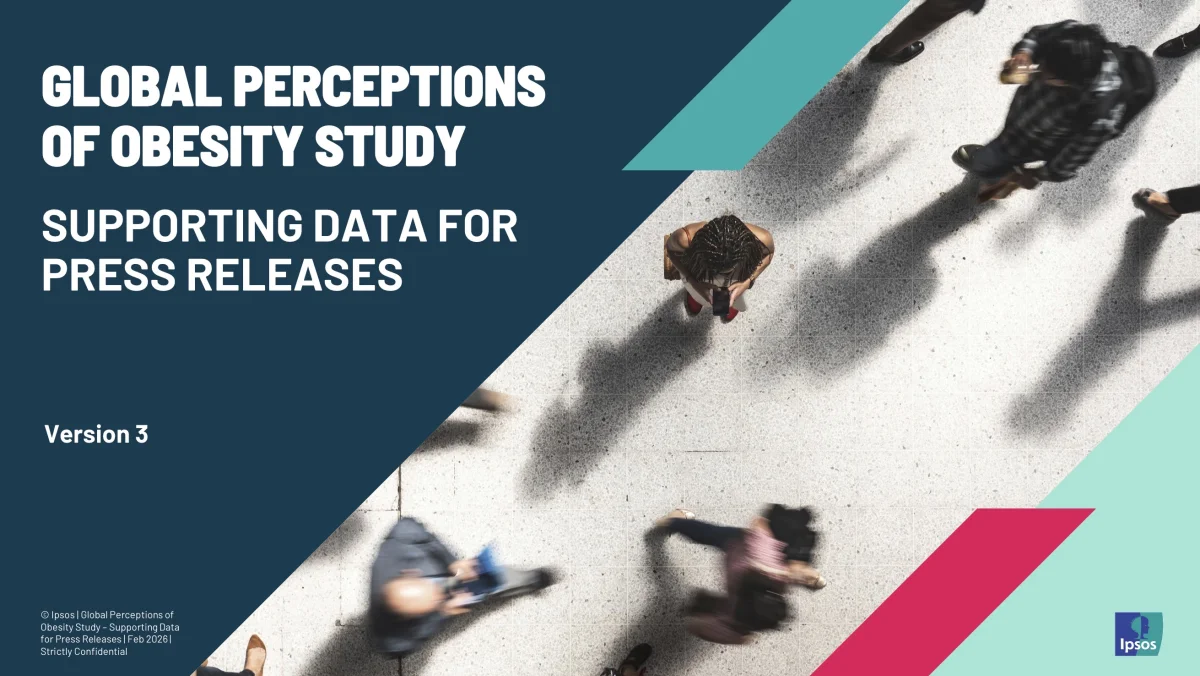
Ipsos Global Perceptions of Obesity Study 2026 cover — aerial view of diverse adults walking on a city street

In This Article

  • How the global obesity study was conducted
  • Personal choice vs. chronic disease — the central tension
  • Why most people with obesity don't see a doctor
  • Limited awareness of obesity-related health risks
  • The full life impact: emotional, social, financial
  • Stigma, judgment and the avoidance of social life
  • What this means for treatment and policy in 2026
  • Frequently asked questions

How the Global Obesity Study Was Conducted

Ipsos surveyed 14,500 adults in 14 countries between December 2025 and January 2026, including the UK, India, Brazil, Mexico, Italy, Saudi Arabia, South Korea, the UAE and others. Using self-reported height and weight, researchers identified 3,094 respondents living with obesity and 11,406 not living with obesity, enabling robust comparisons between the two groups. The study explored how weight affects physical health, emotional wellbeing, social life, work, healthcare use and attitudes to treatment.

Obesity: Personal Choices or Medical Condition?

One of the most important insights is the tension between viewing obesity as a matter of willpower and recognising it as a chronic disease. Two-thirds (66%) of people living with obesity believe their condition is preventable through personal choices, and almost two-thirds (63%) say diet and exercise alone can solve obesity for most people. Yet seven in ten (71%) also agree that obesity is a medical condition requiring ongoing management, while only about half (51%) acknowledge genetics and biology as primary causes.

This mix of beliefs has real implications for obesity treatment and stigma reduction. When obesity is seen mainly as a lifestyle failure rather than a medical condition influenced by biology, environment and social factors, people may feel shame instead of seeking evidence-based help.

Trying to Lose Weight Without Consistent Medical Support

Doctor in a bright clinic having a supportive conversation with a patient about weight management

The study shows that most people living with obesity are actively trying to manage their weight, but medical support is not used consistently. More than eight in ten (81%) have been advised to lose weight or have considered doing so to prevent serious health problems. However, only 35% have spoken to a doctor about their weight in the past 12 months — a figure almost identical to the share who tried a fad or non-recommended diet (33%).

When people do see doctors, advice still focuses heavily on lifestyle change. Among those who have discussed weight with a doctor, 82% report lifestyle-focused recommendations such as eating healthier (60%), doing more exercise (60%) and eating smaller portions (43%). A smaller proportion recall being guided toward structured weight management programmes, digital tools, or other supportive interventions.

Among those who have not seen a doctor about their weight in the last three months, the leading reason is a preference to manage weight independently (31%), followed by concerns about cost, fear of being judged and doubts about maintaining recommended changes. This suggests that better communication, accessible services and non-stigmatizing care could help close the gap between intention and professional support.

Limited Awareness of Obesity-Related Health Risks

Despite high levels of concern about future health, awareness of the full spectrum of obesity-related risks remains incomplete. Almost half (48%) of people living with obesity say they frequently worry about future health problems because of their weight. However, just over half associate obesity with type 2 diabetes (53%) and heart disease (52%), and only 18% link it to certain cancers and 29% to premature death.

Health risk % of people with obesity who link it to weight
Type 2 diabetes53%
Heart disease52%
Premature death29%
Certain cancers18%

For public health campaigns and clinical conversations, this is a critical opportunity. Improving understanding of conditions like type 2 diabetes, cardiovascular disease and obesity-related cancers could motivate earlier, sustained engagement with treatment and prevention.

The Impact of Obesity on Daily Life and Wellbeing

Diverse group of adults walking together on a city sidewalk, representing the daily lived experience of weight and community

The study makes clear that obesity affects far more than the number on the scale. Overall, people living with obesity are 19 percentage points less likely to be satisfied with their physical health (40%) than those not living with obesity (59%). At least seven in ten say their weight has negatively affected every key life dimension measured, from physical health and emotional wellbeing to work, relationships, confidence and finances.

Obesity and weight are reported to impact:

This broad impact underscores why obesity management strategies need to be holistic, addressing mental health, social support and stigma alongside medical care and behavioural change.

Stigma, Judgment and Avoidance of Social Life

Beyond health, one of the most striking findings is the level of stigma and self-consciousness people living with obesity report. Compared with people not living with obesity, they are significantly more likely to frequently feel:

Frequent feeling People with obesity People without obesity
Judged based on how they look35%24%
Self-conscious or embarrassed because of weight35%24%
Perceived as lacking self-control or willpower32%21%
Avoided social, leisure or romantic activity in the past year70%53%

This perceived judgment translates into behaviour. Seventy percent of people living with obesity say they have avoided social, leisure or romantic activities in the last year because of their weight, including being in photos or videos — highlighting how weight stigma can quietly limit everyday experiences and memories.

For advocates and healthcare providers, tackling weight stigma is therefore not a "nice to have" but a central part of effective obesity care. Reducing blame and bias can make it easier for people to talk openly about weight and access support without fear of humiliation.

What This Means for Obesity Treatment and Policy

Taken together, the Ipsos Global Perceptions of Obesity Study points to several priorities for 2026 and beyond.

Where Bariatric Care Fits In

For people whose obesity has not responded to lifestyle change or medication alone, modern bariatric and endoscopic procedures are an evidence-based, long-term option. At Istanbul Bariatric Center we treat obesity as a chronic medical condition — combining surgery or endoscopic procedures with structured nutritional, psychological and long-term aftercare. If you are unsure whether you would benefit, our eligibility assessment gives you a clear, judgement-free first step.

Frequently Asked Questions

What is the Ipsos Global Perceptions of Obesity Study?

It is a 2026 international survey of 14,500 adults across 14 countries — including 3,094 people living with obesity — exploring how weight affects health, emotional wellbeing, work, relationships and use of medical care.

How many people with obesity actually speak to a doctor about their weight?

Only 35% have spoken to a doctor about their weight in the past 12 months — almost the same share as those who tried a fad or non-recommended diet (33%).

Do people understand the health risks of obesity?

Awareness is incomplete. About half link obesity to type 2 diabetes (53%) and heart disease (52%), but only 29% to premature death and just 18% to certain cancers.

How common is weight stigma?

Very common. People with obesity are far more likely to feel judged (35% vs 24%), embarrassed (35% vs 24%) and seen as lacking willpower (32% vs 21%), and 70% have avoided social, leisure or romantic activities because of their weight.

Is obesity a chronic disease or a lifestyle issue?

Both perceptions coexist. 71% of people with obesity agree it is a medical condition requiring ongoing management, yet 63% also believe diet and exercise alone can solve it for most people. Modern medicine treats it as a chronic, multifactorial disease.

What can someone do if lifestyle change has not worked?

Speak to a clinician about evidence-based options: structured weight management programmes, GLP-1 medications, endoscopic procedures such as ESG, and bariatric surgery. The right path depends on BMI, health conditions and personal goals.

Take the First Step Without Judgment

Our team treats obesity as a chronic medical condition — not a personal failing. Complete our private eligibility assessment and a clinician will respond within 48 hours with a clear, evidence-based recommendation.

Start Free Assessment →

Source: Ipsos | Global Perceptions of Obesity Study — Supporting Data (March 2026)

Related reading:

Mounjaro vs Bariatric Surgery 2026: Which Wins for Long-Term Weight Loss?: Mounjaro (tirzepatide) vs bariatric surgery in 2026 — head-to-head comparison of weight loss results, cost, side effects, durability and ideal patient profile. Includes evidence tables and a decision framework. Weight Loss Surgery Cost in Turkey 2026: Honest Pricing Guide: Up-to-date 2026 prices for gastric sleeve, bypass, balloon and ESG in Turkey vs UK, USA, Germany and Mexico. What is included, what is not, and the hidden costs to watch for. Gastric Sleeve Recovery Week by Week: A Realistic 12-Week Timeline: What to actually expect each week after gastric sleeve surgery — physical milestones, diet stages, energy levels, common worries and red flags. A realistic, no-fluff 12-week recovery roadmap. Gastric Sleeve vs Mini Gastric Bypass 2026: Which Is Right For You?: Detailed 2026 comparison of gastric sleeve and mini gastric bypass — weight loss, diabetes remission, reflux risk, cost, recovery and reversibility. A clear decision matrix to choose the right operation. Is Bariatric Surgery Permanent? 5, 10 and 20-Year Results Honestly Reviewed: An honest look at whether bariatric surgery is truly permanent. What stays the same forever, what can change, why some patients regain, and what 20 years of follow-up data really shows. Weight Regain After Gastric Sleeve: Causes, Solutions and How to Reset: Why some patients regain weight after gastric sleeve, the warning signs to spot early, and the proven medical, behavioural and surgical options to reverse regain in 2026. Bariatric Surgery Day-by-Day Recovery Timeline: The First 30 Days: A precise day-by-day recovery timeline for the first 30 days after gastric sleeve, bypass or mini bypass — what you can eat, do, lift, and when to call your surgeon. Honest, no fluff. Life After Gastric Bypass: Real Patient Stories From Year 1, 5 and 10: What life is really like after gastric bypass — three honest patient stories at 1, 5 and 10 years post-op covering food, energy, relationships, work and what they wish they had known. Cheapest Country for Bariatric Surgery 2026: Honest 8-Country Comparison: Where is bariatric surgery actually cheapest — and is cheap the right metric? A 2026 comparison of price, quality, safety, aftercare and total cost across Turkey, Mexico, India, Thailand, the UK, USA, Germany and Czechia. How to Choose a Bariatric Surgeon in Istanbul: 2026 Checklist: A practical 2026 checklist for choosing the right bariatric surgeon in Istanbul — credentials, case volume, hospital accreditation, aftercare, red flags, and the exact questions to ask before paying a deposit. All-Inclusive Bariatric Package Istanbul 2026: What's Really Included: Exactly what an all-inclusive bariatric package in Istanbul covers in 2026 — surgery, hotel, transfers, tests, aftercare — and the hidden extras to ask about before you book. Medical Tourism Istanbul Bariatric Surgery: A Step-by-Step 2026 Guide: From first enquiry to flying home — every step of the medical tourism process for bariatric surgery in Istanbul, with timings, paperwork, costs and what to do if anything goes wrong. Bariatric Surgery Insurance Coverage 2026: International Patient Guide: Will insurance cover your bariatric surgery in Turkey? A 2026 guide for UK, EU, US and Middle Eastern patients on what is covered, how to claim back, what travel insurance you need, and how to fund the gap. Gastric Balloon vs Gastric Sleeve 2026: Which Is Right For You?: Detailed 2026 comparison of gastric balloon and gastric sleeve — weight loss, reversibility, recovery, cost, and how to choose between a temporary device and permanent surgery. Bariatric Surgery and Pregnancy 2026: Timing, Safety and Nutrition: Planning pregnancy after bariatric surgery? A 2026 evidence-based guide to timing, fertility improvements, vitamin needs, monitoring during pregnancy and breastfeeding considerations. Dumping Syndrome After Gastric Bypass: 2026 Management Guide: What dumping syndrome feels like, why it happens after gastric bypass, and a practical 2026 dietary, behavioural and medical management plan to keep symptoms under control. Hair Loss After Bariatric Surgery: Prevention Guide 2026: Why hair loss happens after gastric sleeve and bypass, when to expect it, how to prevent it, and the supplements and habits that protect your hair through rapid weight loss in 2026. Loose Skin After Weight Loss Surgery 2026: Your Options: Why loose skin happens after major weight loss, what you can do without surgery, and a 2026 overview of body contouring procedures available in Istanbul including timing, cost and recovery. Bariatric Surgery and Mental Health 2026: The Emotional Journey: An honest 2026 guide to the emotional journey of bariatric surgery — pre-op anxiety, post-op grief, identity shifts, addiction transfer, and where to find evidence-based mental health support. Revision Bariatric Surgery 2026: Options When Your Sleeve Has Failed: What to do when your gastric sleeve has failed — the 2026 revision options including conversion to bypass, mini bypass, SADI-S, and re-sleeve, with realistic outcomes, costs and risks in Istanbul. Global Perceptions of Obesity in 2026: What a New Ipsos Study Reveals: A new Ipsos Global Perceptions of Obesity Study surveyed 14,500 adults across 14 countries. Here is what it reveals about stigma, treatment access, risk awareness and the future of obesity care in 2026. ESG & TORe 2026: Clinical Evidence for Endoscopic Weight Loss: Explore non-surgical weight loss with ESG and TORe at Istanbul Bariatric Center. Latest 2026 clinical evidence, 5-year outcomes, and safety data. Ileal Transposition Surgery for Diabetes: What Patients Need to Know: Ileal transposition is an investigational metabolic procedure that repositions part of the small intestine to boost natural gut hormones like GLP-1. Learn how it works, who it is for, and why it is not yet a standard treatment for diabetes. Gastric Fundus Mucosal Ablation (GFMA) Latest News: GFMA: A New Era in Non-Surgical Weight Loss. Recent studies suggest an endoscopic procedure could curb hunger and achieve surgical-level weight loss without any incisions. Scientific Blind Alleys: Dietary Fat, Sugar, Freud, and Adler: How Two Historic Health Myths Shaped Today's Obesity Crisis — and How We Can Fix It. Minimizer Ring: What is it and what is it used for?: The MiniMIZER® Ring in Bariatric Surgery: Enhancing Outcomes in Primary and Revisional Procedures. Five High-Cholesterol Foods You Should Eat – and Which Ones to Avoid: New research reveals that not all cholesterol-rich foods are bad for you. A cardiologist helps explain what to eat and what to skip. Weight Loss Treatments: A Holistic Comparison: Weight loss treatments broadening every day with new medications, revolutionary endoscopic methods and different variations of surgical options. Gastric Fundus Ablation Explained: Revolutionizing Endoscopic Weight Loss Method. A groundbreaking, minimally invasive procedure offering new hope for sustainable weight loss. Could Weight Loss Injections Replace Obesity Surgery?: Weight loss injections, particularly GLP-1 analogs such as semaglutide and tirzepatide, are revolutionizing the treatment of obesity. Body Roundness Index (BRI): Body Roundness Index, is it the New BMI? What it Says About Your Health. Ultra-processed Foods and Their Impact on Your Health: Understanding Ultra-Processed Foods: A Deep Dive into Our Daily Diet. Comparing Bariatric Surgery and Endoscopic Sleeve Gastroplasty: Making an Informed Choice for Weight Loss. Understanding the differences between bariatric surgery and ESG is crucial. 5 Things You Didn't Know About Bariatric Surgery: Five Things You May Not Know About Bariatric Surgery. Bariatric Surgery Guidelines Updated: Updated Guidelines on Bariatric Surgery: A Comprehensive Overview. Barrett's Esophagus and Increased Risk After Sleeve Gastrectomy: Barrett's Esophagus is a serious consequence of long term acid reflux. Recent research reveals important findings about risk factors after sleeve gastrectomy. Comprehensive Guide to Preoperative Medication Management: Proper medication management before bariatric surgery is crucial for ensuring your safety and optimizing surgical outcomes. Leaks in Bariatric Surgery: Prevention, Causes & Management: Understand gastric leaks after bariatric surgery. Istanbul Bariatric Center provides expert insights on causes, prevention, and treatment options. Obesity and Cancer Risk: Each year, over 684,000 Americans are diagnosed with cancers linked to obesity. 15 Most Nutrient-Dense Foods: Simplify Your Diet, Improve Nutrition, and Reduce Calories. Bariatric Surgery Nutrition: Comprehensive Bariatric Surgery Nutrition and Recovery Guide based on 2024 guidelines for optimal outcomes and long-term success. Leptin Hormone in Obesity Treatment: How the Human Body Stores Energy, Hormones' Effect on Metabolism. Bariatric Surgery Pros and Cons: Bariatric Surgery: Weighing the Pros and Cons – Is It Right for You? Endoscopic Sleeve Gastroplasty vs Gastric Sleeve: Comparing VSG and ESG: Traditional Gastric Sleeve vs. Endoscopic Sleeve. Endoscopic Sleeve Gastroplasty Long Term Results: Endoscopic Sleeve Gastroplasty: A Long-Term Solution for Weight Loss? Endo Band: A Novel Endoscopic Approach for Weight Loss: The Endo Band offers a less invasive alternative to traditional surgery, representing the latest innovation in endoscopic bariatric procedures. Vitamin and Mineral Deficiencies After Gastric Bypass: How to Avoid Vitamin and Mineral Deficiencies After Gastric Bypass Surgery. Bariatric Surgery as Safe as Other Common Operations: A comprehensive analysis comparing the safety of metabolic and bariatric surgery. Grazing After Bariatric Surgery: One of the most common challenges that bariatric patients face is grazing. Bariatric-Friendly Christmas Dinner Ideas: The holiday season is a time for joy, family, and delicious food. Discover 9 delicious bariatric-friendly recipes perfect for your Christmas celebration. Endoscopic Sleeve Gastroplasty in Class III Obesity: New Study Revealed ESG's Safety and Efficacy in Class III Obesity. POSE Endoscopic Sleeve Gastroplasty in the Treatment of Obesity: Are you struggling with obesity and looking for a less invasive weight loss solution? Endoscopic Sleeve Gastroplasty: A Game-Changer in Obesity Treatment: NICE Approves Endoscopic Sleeve Gastroplasty for Primary Obesity Treatment. Fatty Liver Increases In Adolescents: Chronic choline deficiency in diets can lead to fatty liver. Bariatric Surgery 18 Frequently Asked Questions: Every medical procedure involves inherent risks. Melatonin: Sleep, Glucose Metabolism, and Late-Night Eating Habits: Melatonin has garnered significant attention due to its potential impact on glucose metabolism. Argon Plasma Coagulation: An Effective Solution for Weight Regain: Around 20% of obese patients who undergo RYGB fail to sustain weight loss. Revisional Bariatric Surgery in Turkey!: Revisional bariatric surgery is performed on individuals who have previously undergone bariatric surgery. Marmite, A Rich Resource of Vitamin B: Unveiling the Marvels of Marmite: Ingredients, Usage, Recipes, Health Benefits. Ozempic: No 1 Best Medical Treatment of Obesity: Ozempic is a weekly injection of Semaglutide and advisable for the first line treatment option for weight loss. BariClip: The Brand-new Bariatric Clip for Weight-loss: Obesity is an expanding health issue. One new speculative treatment resembling a clip for weightloss. Elipse Swallowable Intragastric Balloon Reveals Substantial Weight-loss: The Allurion intragastric balloon (formerly the Elipse) is a unique balloon that is swallowed. Transit Bipartition: An Attractive Revision Alternative When Sleeve Gastrectomy Fails: For patients that couldn't lose adequate weight or regain weight after LSG. Bariatric Preoperative Diet: Getting more fit before a surgical procedure diminishes the amount of fat tissue. Obese adults in 'at-risk' priority group for COVID vaccine: According to the latest official government guidance, the priority for giving the vaccine will be to obese adults. Why Istanbul is an Important Location for Obesity Surgery?: Istanbul has what it takes to be famous in this field. Well equipped hospitals, expert doctors. Should You Consider Having A Bariatric Surgery During the COVID-19 Pandemic?: A Cleveland Clinic study shows that among obese patients who tested positive for COVID-19. Nutrition Tips During Self-Quarantine (COVID-19): Since you need to spend this period at home, these suggestions will strengthen your immune system.
Weight Loss Surgery in Turkey