ESG Joins the UK National Bariatric Surgery Registry: What It Means for Patients in 2026
ESG Joins the UK National Bariatric Surgery Registry: What It Means for Patients in 2026
Bariatric News reports that the British Obesity & Metabolic Specialist Society (BOMSS) is incorporating Endoscopic Sleeve Gastroplasty (ESG) data into the UK's National Bariatric Surgery Registry (NBSR). In the interview, Mr Omar Khan and Mr Jamie Kelly discuss registry oversight and ESG's place in obesity care. This article distinguishes their reported views from the evidence and limitations in our medically reviewed ESG treatment guide. Registry inclusion supports monitoring; it does not establish ten-year durability or guarantee an individual outcome.
In This Article
- What the NBSR is and why ESG inclusion matters
- Where ESG sits in the 2026 obesity treatment spectrum
- Long-term ESG outcomes and the limits of ten-year reports
- Safety evidence and limits of cross-study comparisons
- Reflux and individual assessment
- NICE guidance, NHS access and cost-effectiveness
- Who is the right candidate for ESG?
- How ESG is performed at Istanbul Bariatric Center
- Frequently asked questions
What Is the NBSR — and Why Does ESG Inclusion Matter?
The National Bariatric Surgery Registry was established in 2008 as a voluntary audit tool and became mandatory for all NHS bariatric cases in 2013. Since then it has produced the annual Consultant Outcome Publication, showing transparent outcomes for every individual consultant and unit. Initially it tracked gastric bands, sleeve, bypass and BPD/DS; over time it has expanded to include gastric balloons and one-anastomosis gastric bypass.
Adding ESG to the registry is significant because it formally moves the procedure out of the "newer, niche, mostly private" category and into the mainstream UK obesity-care evidence base — alongside surgical procedures that have been monitored for decades. As Mr Khan explains, the change also reflects the renaming of BOMSS into a metabolic specialist society, recognising that gastroenterologists, not just surgeons, perform many of these procedures.
The ESG dataset will record patient demographics, procedure volumes, weight loss outcomes, complications and detailed quality-of-life information — the latter being something traditional procedures have far less of.
Where ESG Sits in the 2026 Obesity Treatment Spectrum
Both specialists made the same point: in the era of GLP-1 medications, the old "either surgery or nothing" mindset no longer holds. ESG fits clearly in the modern continuum of care:
| Intervention | Invasiveness | Typical weight loss | Reversible? |
|---|---|---|---|
| Diet & exercise | None | 3–8% TBWL | Yes |
| GLP-1 medication (Mounjaro/Wegovy) | Injection | 15–22% TBWL | Yes (regain on stop) |
| ESG (Endoscopic) | No incisions | 13.6% average TBWL at 1 year in MERIT | Revision may be possible; reversal is not guaranteed |
| Gastric Sleeve | Laparoscopic | 25–30% TBWL | No |
| Gastric Bypass | Laparoscopic | 30–35% TBWL | No |
Mr Khan describes ESG as part of a "risk-reward spectrum" — fitting between medication and surgery and particularly valuable for patients who are intolerant of GLP-1s, who do not want major surgery, or who need revision after a previous procedure.
Long-Term ESG Outcomes: What Is Established and What Remains Emerging?
The MERIT randomised trial reported 13.6% average total body weight loss at one year after ESG. A five-year follow-up study reported 15.9% average total body weight loss. These are study results, not Istanbul Bariatric Center outcomes or predictions for an individual patient.
The Bariatric News interview discusses ten-year follow-up attributed to Lahooti et al. in 2024. In line with our reviewed treatment guidance, ten-year conference follow-up remains emerging evidence: the original source and conflicting numerical reports require verification. We therefore do not present a ten-year figure or describe that report as proof of established ten-year durability. Registry inclusion should help collect further outcome data, not be interpreted as resolving these limitations.
Safety Evidence: Why Cross-Study Rates Are Not a Direct Comparison
MERIT reported ESG-related serious adverse events in 3 of 131 treated participants (2%), with no mortality, intensive care or surgery required in that trial. This does not mean ESG is risk-free or that the same rate applies to every patient or clinic.
ESG, surgical sleeve and GLP-1 medication studies may use different populations, adverse-event definitions, attribution rules and follow-up periods. Their percentages should not be placed side by side as proof that one treatment is safer. MERIT compared ESG with lifestyle modification, not GLP-1 medicines or surgical sleeve. A treatment choice should consider individual risks, alternatives and ongoing monitoring; see our ESG versus gastric sleeve decision guide.
Reflux After ESG: Potential Effects Are Not a Personal Recommendation
In the Bariatric News interview, Mr Kelly discusses a proposed anatomical explanation for possible reflux improvement after ESG. This reported mechanism is not proof that ESG treats existing reflux or repairs a hiatal hernia, and it should not be read as a guaranteed clinical advantage for a patient with reflux.
The MERIT trial reported new reflux in 1.3% after ESG. Surgical sleeve can cause or worsen reflux in some patients, but a clinician must assess existing reflux, hiatal hernia, anatomy and medication before recommending either procedure. Symptoms may need separate investigation and treatment.
NICE Guidance, NHS Access and Cost-Effectiveness
NICE guidance HTG711 describes ESG as an option for adults with obesity, with standard arrangements for clinical governance, consent and audit. This guidance does not set a universal BMI threshold for booking ESG or guarantee NHS funding. NHS commissioning, referral criteria and local capacity must be confirmed with the patient's NHS team.
The interview cites Kelly et al. (International Journal of Obesity, 2023), a cost-effectiveness analysis of ESG versus lifestyle modification in adults with class II obesity. A modelling study depends on its population, costs and assumptions; it is not evidence of NHS availability or a guarantee of day-case discharge.
Who Is the Right Candidate for ESG?
ESG is commonly assessed in adults with obesity, often with BMI 30 or above, when diet, activity or medication has not produced sufficient lasting weight loss. Selected patients outside the usual range may be considered after specialist assessment. BMI alone does not establish eligibility, and this adult guidance should not be extrapolated to adolescents.
- Review medical history, anatomy, previous procedures, medicines, anaesthetic risk and treatment goals.
- Assess existing reflux and hiatal hernia; a large hiatal hernia, active ulcer disease, bleeding disorder, altered upper-GI anatomy, pregnancy or an untreated eating disorder may change the recommendation.
- Discuss medication, surgical and other endoscopic alternatives, and the ability to follow staged nutrition and long-term aftercare.
- Revision after previous bariatric surgery is not the same as primary ESG and requires specialist anatomical assessment.
How ESG Is Performed at Istanbul Bariatric Center
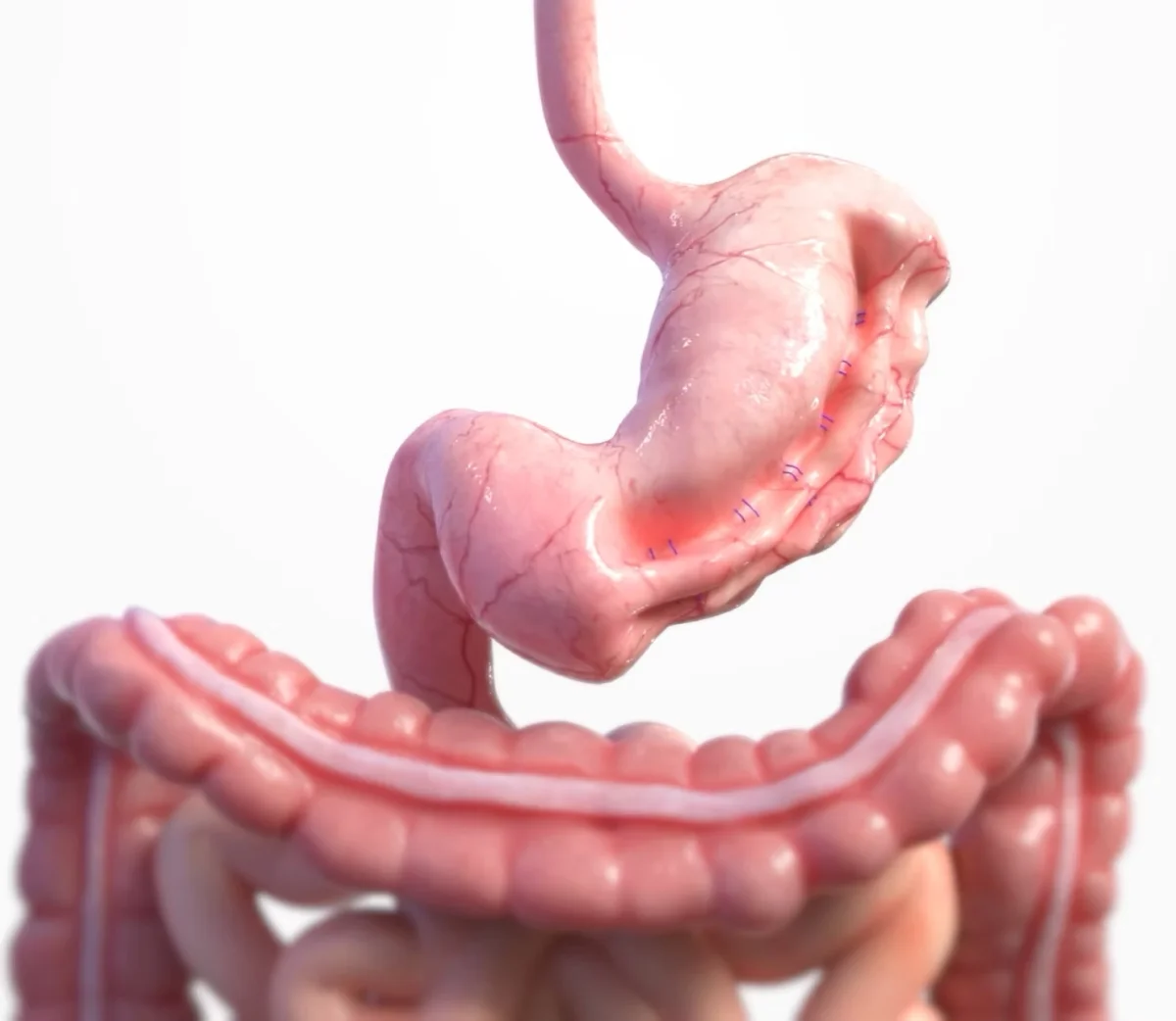
At Istanbul Bariatric Center, Dr Murat Üstün provides ESG using the Apollo OverStitch system at JCI-accredited Liv Hospital Vadistanbul. The reviewed treatment guide describes the following pathway, subject to individual assessment:
- Consultation, requested tests and anaesthetic assessment before treatment.
- About 60–90 minutes under general anaesthesia, usually followed by one night of observation.
- A staged diet, dietitian support and long-term follow-up; the written plan should confirm scope and contacts after returning home.
- International patients should usually plan 4–5 nights in Istanbul, with travel clearance from the treating team.
Published study results are not the clinic's own outcome audit. Request a written quote confirming the named clinician and hospital, inclusions, exclusions, effective date and follow-up. A price comparison alone cannot establish equivalent clinical care.
Frequently Asked Questions
Is ESG the same as a gastric sleeve?
No. A gastric sleeve surgically removes 75–80% of the stomach. ESG uses an endoscope to suture the stomach into a tube shape without removing tissue or making abdominal incisions. Revision or conversion may be possible in selected patients, but reversal is not guaranteed and requires specialist assessment.
How much weight can I lose with ESG?
MERIT reported 13.6% average total body weight loss at one year, and a five-year study reported 15.9%. These averages are not an individual prediction or clinic-specific result. Ten-year conference follow-up remains emerging evidence pending verification of the original source and numerical reports. Outcomes depend on clinical factors and long-term follow-up.
Is ESG covered by the NHS?
NICE HTG711 describes ESG as an option for adults with obesity; it does not guarantee NHS funding. Ask your NHS team about local commissioning, referral criteria and capacity. Registry inclusion is not a funding decision.
Does ESG cause nutritional deficiencies?
ESG does not remove stomach tissue or bypass the small intestine, but reduced intake, vomiting or a pre-existing deficiency can affect nutrition. The dietitian and treating team set protein, fluid, supplement and monitoring instructions for the individual patient; organ preservation does not remove the need for nutritional follow-up.
Does ESG make reflux worse?
New reflux was reported in 1.3% after ESG in MERIT. Potential reflux improvement discussed in the interview is not a guarantee or an indication to choose ESG. Existing reflux, hiatal hernia and medication require individual assessment; surgical sleeve can cause or worsen reflux in some patients.
Will my ESG data be added to the NBSR if I have the procedure in Turkey?
The interview concerns registry collection for UK procedures; do not assume a procedure in Turkey will be included. Ask the treating team which registry or audit applies, what outcomes it records and how consent and data use are handled. The studies cited here are not an audit of Istanbul Bariatric Center outcomes.
How long does the ESG procedure take?
The reviewed clinic guidance describes about 60–90 minutes under general anaesthesia and usually one night of observation. Some patients may leave the same day, but discharge depends on individual assessment. International patients should usually plan 4–5 nights in Istanbul and obtain travel clearance from the treating team.
Considering ESG in 2026?
Get a written assessment from our endoscopic team within 48 hours, including whether ESG, GLP-1 or surgery is the right fit for your BMI, health profile and goals — with full Istanbul pricing and timing.
Explore ESG at Istanbul Bariatric Center →Source: Bariatric News — Improving Our Understanding of Endoscopic Sleeve Gastroplasty (interview with Mr Omar Khan and Mr Jamie Kelly).
Editorial update: 11 October 2026. Evidence wording aligned with the site's medically reviewed ESG guidance; the original publication date is unchanged. The interview is a news source, not a clinic outcome audit or a personal treatment recommendation.
Related reading: