Gastric Balloon vs Gastric Sleeve 2026: Which Is Right For You?
Gastric Balloon vs Gastric Sleeve: The 2026 Decision Guide
Patients with a BMI of 30 to 40 face a real fork in the road in 2026. On one path is the gastric balloon — temporary, non-surgical, fully reversible. On the other is the gastric sleeve — permanent, surgical and dramatically more effective. Both are valid; the right one depends on your starting BMI, goals, lifestyle and how much weight you actually need to lose. This guide compares them side-by-side so you can make a clear-eyed choice.
In This Article
- How each procedure works
- Side-by-side: weight loss, recovery, cost
- Who is the ideal candidate for each
- Reversibility and the regain question
- Combining a balloon now with a sleeve later
- 2026 pricing in Turkey
How Each One Works
Gastric Balloon (Allurion / Orbera / Spatz3)
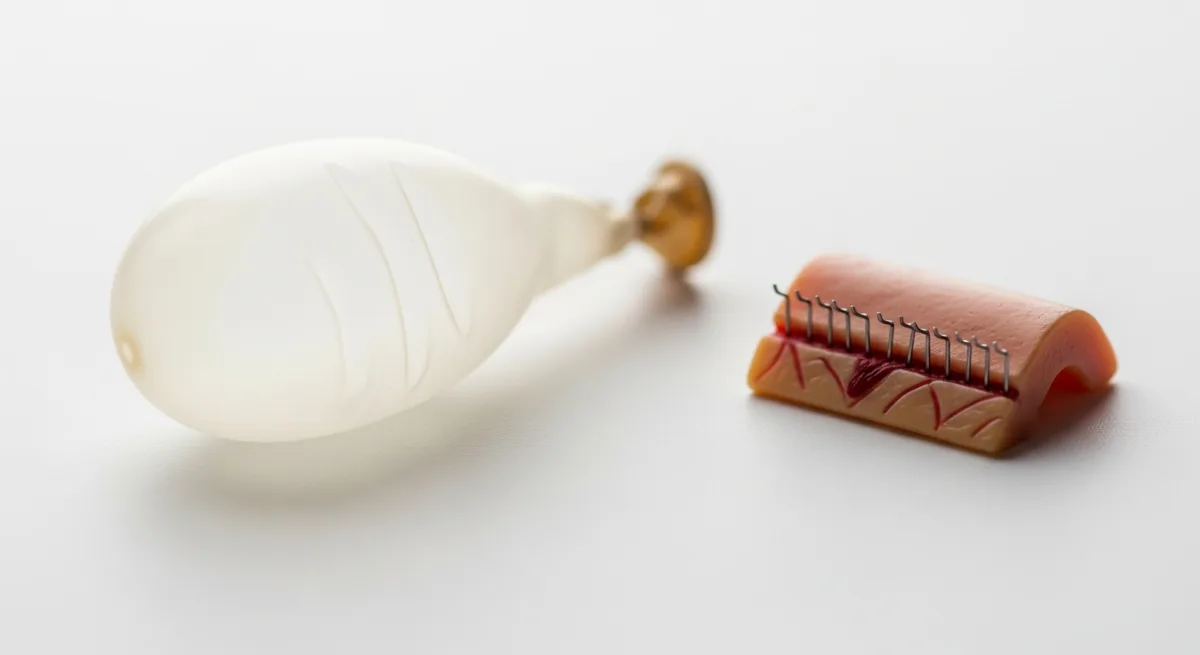
A soft silicone balloon is placed in the stomach via endoscopy (Orbera/Spatz3) or simply swallowed in capsule form (Allurion — no anaesthesia, no endoscopy). Once inside, it is filled with 400–700 ml of saline. It occupies space, slows gastric emptying and triggers earlier fullness. After 4 (Allurion) or 6 (Orbera) or 12 (Spatz3) months, it is removed or naturally expelled.
Gastric Sleeve (Vertical Sleeve Gastrectomy)
Permanent laparoscopic surgery removing 75–80% of the stomach, leaving a banana-shaped tube. The reduced stomach holds far less, and the removed section produced most of the body's hunger hormone ghrelin — so appetite drops dramatically.
Side-by-Side: 2026 Comparison Table
| Factor | Gastric Balloon | Gastric Sleeve |
|---|---|---|
| Average weight loss | 10–18 kg | 30–50 kg |
| % of excess weight lost | 25–35% | 60–70% |
| Surgery required | No (or minor endoscopy) | Yes — laparoscopic |
| Reversible | Yes — fully | No — permanent |
| Hospital stay | 0–1 night | 2 nights |
| Recovery time | 3–5 days | 2–3 weeks |
| Diabetes remission | Sometimes | 60–80% |
| Vitamins for life | No | Yes |
| Best BMI range | 27–35 | 35+ |
| Indicative price (Istanbul) | £1,900–£2,900 | £2,450–£4,900 (Ultra Eco sleeve only at partner hospital; higher tiers differ) |
Who Is the Balloon For?
- BMI 27–35 with 10–20 kg to lose
- Patients not yet ready for permanent surgery
- Candidates with a clear short-term goal (wedding, fertility treatment, knee replacement)
- Pre-bariatric patients who need to lose weight before sleeve/bypass for safety
- Those who want to test how their body adapts to portion restriction before committing to surgery
Who Is the Sleeve For?
- BMI 35+ (or 30+ with type 2 diabetes / serious comorbidity)
- Patients needing 30+ kg long-term loss
- Those who have tried diet, medication and balloon without sustained success
- Patients with diabetes wanting metabolic remission
- Those who accept a permanent change for permanent results
The Reversibility Question
The balloon is fully reversible. The day it comes out, your stomach returns to its previous shape and capacity. This is its strength — and its weakness. Studies show that around 30–50% of balloon patients regain most of their weight within 12 months of removal unless they have committed to durable lifestyle change.
The sleeve is permanent, but in 2026 it is largely irreversible only in the strict anatomical sense. The dramatic appetite reduction, the small portion size and the metabolic improvements are also permanent for most patients. Long-term published data (5- and 10-year follow-up) shows 50–60% of pre-op excess weight maintained off.
Combining a Balloon Now With a Sleeve Later
This is increasingly popular for patients with BMI 38–45 who feel hesitant about immediate surgery. The pathway:
- Balloon for 6–12 months → lose 12–20 kg, reduce surgical risk
- Lifestyle work with the dietitian during the balloon period
- Sleeve 3–6 months after balloon removal if further loss needed
It is more expensive overall but reduces the perioperative risk profile of a very high BMI patient and allows them to "test-drive" portion restriction before committing surgically.
Frequently Asked Questions
Is the swallowable Allurion balloon really as effective as Orbera?
Comparable for short-term weight loss (10–15 kg over 4 months). Convenience is a major advantage — no anaesthesia, no endoscopy. Less data on 12-month maintenance compared to Orbera.
Will my insurance cover the balloon?
Same answer as the sleeve in 2026: usually no for the device itself, often yes for follow-up bloods and any complication management.
Can I get pregnant during balloon treatment?
Pregnancy is not recommended with a balloon in place. Most balloons should be removed before trying to conceive.
What about side effects of the balloon?
Nausea and cramping in the first 5–7 days are universal. Severe vomiting, dehydration or balloon migration occurs in under 3% of cases and requires removal.
Find Out Which Procedure Suits You
Complete our free eligibility profile — we will recommend balloon, sleeve or bypass based on your BMI, goals and medical history.
Get Your Free Recommendation →Related reading: