Endo-Band: A Novel Endoscopic Approach
Endo Band: A Novel Endoscopic Approach for Weight Loss
The Endo Band represents an innovative advancement in endoscopic bariatric procedures, offering a less invasive alternative to traditional gastric banding surgery. This novel approach combines the restrictive benefits of gastric banding with the minimally invasive advantages of endoscopic procedures, addressing many of the limitations that led to the decline of traditional laparoscopic adjustable gastric banding (LAGB).
The Evolution of Endoscopic Bariatric Therapies
The field of endoscopic bariatric therapy has evolved significantly over the past decade. While traditional laparoscopic adjustable gastric banding (Lap-Band) was extremely popular in the 1990s and 2000s, it has largely fallen out of favor due to long-term complications such as band erosion, slippage, and the need for revision surgeries. According to 2024 research published in bariatric surgery journals, band erosion rates range from 1-4% with current devices, typically occurring 42-51 months post-surgery.
This shift has driven innovation in the endoscopic bariatric space. In 2022, the FDA approved endoscopic suturing procedures for weight loss, marking a new era in minimally invasive weight management options. The Endo Band builds on this momentum, representing what researchers describe as a novel application of endoscopic band ligation technology for weight loss purposes.
What is the Endo Band?
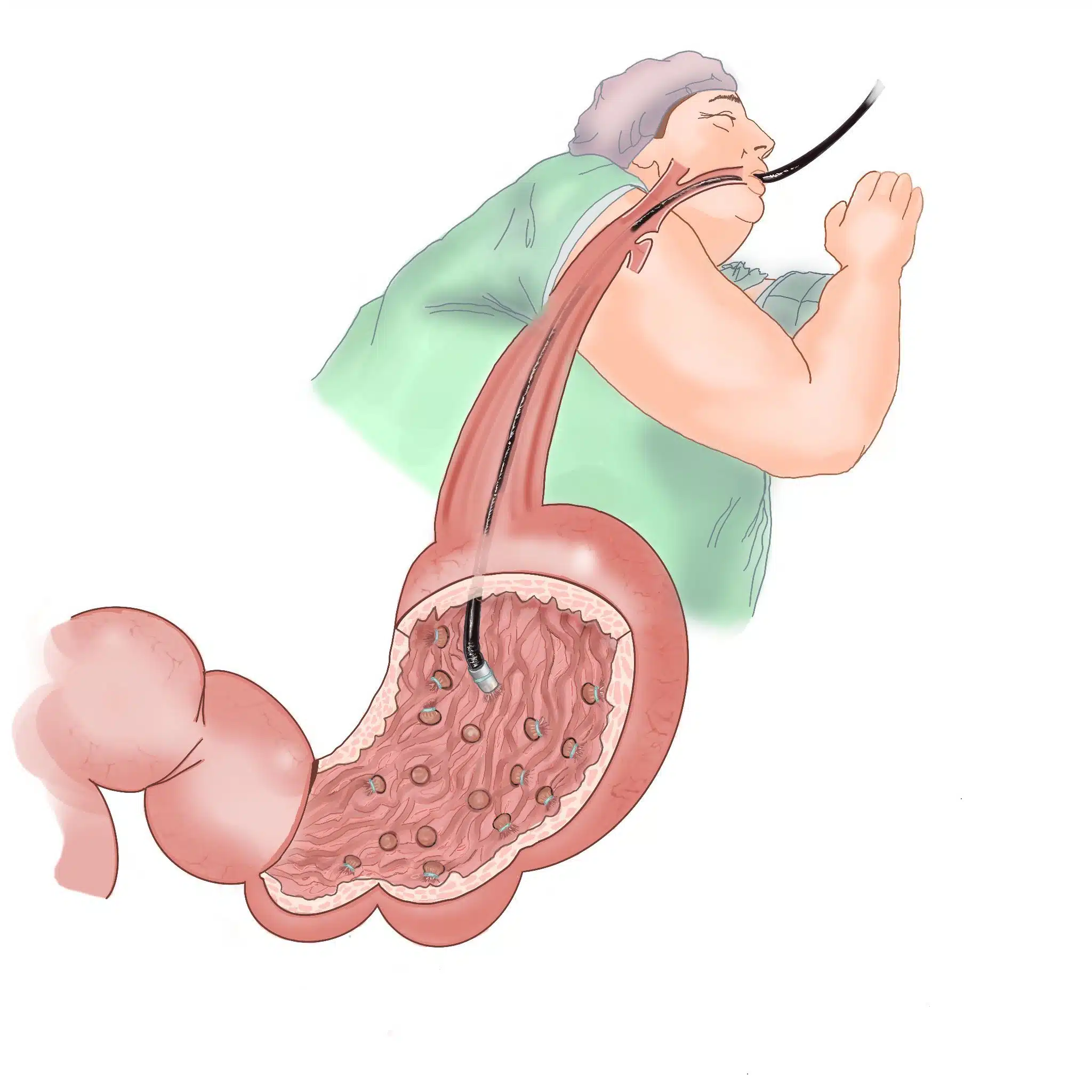
The Endo Band is an endoscopic device designed to create restriction in the stomach using standard endoscopic band ligation techniques. Unlike traditional laparoscopic adjustable gastric banding, the Endo Band is placed entirely through the mouth using an endoscope, requiring no external incisions.
According to ongoing clinical trials, the procedure involves creating 5 parallel rows of bands in the gastric body, working from distal to proximal. The entire procedure typically takes approximately 30 minutes—significantly shorter than traditional surgical approaches.
How Does It Work?
The Endo Band functions by creating restriction in the stomach, which limits food intake and promotes early satiety. The procedure works through several mechanisms:
- Reducing functional stomach size: The bands create restriction that limits the volume of food that can be consumed comfortably
- Slowing gastric emptying: Food passes more slowly from the upper to lower stomach
- Promoting early satiety: Patients feel full with smaller portions
- Supporting behavioral change: The restriction helps patients develop healthier eating habits over time
Current Research and Clinical Trials
The Endo Band procedure is currently being evaluated in clinical trials. According to researchers, "This is the first study to use endoscopic band ligation for weight loss purposes." The trials are designed to assess:
- Safety profile of the procedure
- Efficacy in achieving meaningful weight loss
- Durability of results over time
- Patient satisfaction and quality of life improvements
This research is part of a broader trend in endoscopic bariatric therapies. A 2024 review of endoscopic bariatric options noted that these procedures can achieve weight loss comparable to some surgical interventions while offering fewer complications and no requirement for overnight hospital stays.
Advantages of the Endo Band
The Endo Band offers several potential advantages over traditional surgical approaches:
- Truly Minimally Invasive: No external incisions, scars, or abdominal surgery required
- Quick Procedure: Approximately 30 minutes compared to 1-2 hours for laparoscopic surgery
- Rapid Recovery: Most patients return to normal activities within 1-2 days
- Outpatient Setting: Typically performed as a same-day procedure with no overnight hospital stay
- Lower Complication Risk: Avoids risks associated with abdominal surgery such as wound infection, hernias, and adhesions
- Potentially Reversible: The bands can be removed endoscopically if needed
- No Implanted Hardware: Unlike Lap-Band, there is no port or tubing system that can cause complications
Comparison with Other Endoscopic Procedures
The Endo Band joins a growing family of endoscopic bariatric procedures, each with unique characteristics:
Endoscopic Sleeve Gastroplasty (ESG): Uses suturing to reduce stomach volume by approximately 80%. FDA approved in 2022 and widely available.
Intragastric Balloon: A temporary space-occupying device placed in the stomach for 6-12 months.
Endo Band: Uses band ligation to create restriction—a novel approach currently in clinical trials.
Each procedure has its own risk-benefit profile, and the best choice depends on individual patient factors and preferences.
Who is a Candidate?
The Endo Band may be appropriate for individuals who:
- Have a BMI between 30 and 40 (Class I and II obesity)
- Have tried diet and exercise without achieving lasting success
- Prefer a less invasive approach to weight loss
- May not qualify for or want traditional bariatric surgery
- Want a potentially reversible procedure
- Are looking for a procedure with minimal recovery time
- Have medical conditions that increase surgical risk
Expected Results
While long-term data is still being collected through clinical trials, patients who undergo the Endo Band procedure can expect gradual, sustained weight loss when combined with dietary changes and regular exercise. Based on outcomes from similar endoscopic bariatric procedures, patients may expect:
- 10-20% total body weight loss over 12-24 months
- Improvement in obesity-related health conditions
- Enhanced quality of life and mobility
- Development of healthier eating patterns
It's important to understand that the Endo Band, like all weight loss procedures, is a tool that works best when combined with comprehensive lifestyle changes including nutrition counseling and regular physical activity.
The Future of Endoscopic Bariatrics
The development of the Endo Band reflects a broader trend toward less invasive weight loss interventions. As technology advances, we can expect to see more innovation in this space, providing patients with additional options tailored to their individual needs and preferences.
According to a 2024 Houston Methodist review, endoscopic bariatric programs are expanding to offer patients seeking durable weight loss more options than ever before. These procedures fill an important gap between lifestyle interventions and major surgery.
Conclusion
The Endo Band represents an exciting development in the field of endoscopic bariatric procedures. By offering the benefits of gastric restriction without the need for surgery, it provides patients with another option in their weight loss journey. As clinical trials continue and more data becomes available, we will gain a clearer picture of how this novel procedure fits into the spectrum of weight loss interventions.
As with any medical procedure, it's important to consult with a qualified specialist to determine if the Endo Band or another weight loss intervention is right for you. A comprehensive evaluation will help identify the approach most likely to help you achieve your health and weight loss goals.
Note: The Endo Band procedure is currently being evaluated in clinical trials. Availability may be limited. Always consult with a qualified healthcare provider for the most current information about treatment options.