Revisional Bariatric Surgery in Turkey: Sleeve, Bypass & Failed Weight Loss Options (2026 Guide)
Revisional Bariatric Surgery in Turkey: A Complete Guide
Revisional bariatric surgery is a second operation performed after a previous weight loss procedure when the first surgery no longer delivers the intended result or causes complications. It may be considered for weight regain, insufficient weight loss, reflux after sleeve gastrectomy, anatomical problems, nutritional issues, or relapse of obesity-related disease — always after careful multidisciplinary assessment.
For the right patient, revision surgery can restore restriction, improve reflux control, support further metabolic improvement, or correct technical complications. Because revisional procedures are more technically demanding than primary bariatric surgery, success depends on precise diagnosis, correct procedure selection, and long-term follow-up rather than a one-size-fits-all approach. At Istanbul Bariatric Center, every revision case is planned individually by a surgeon-led multidisciplinary team at a JCI-accredited hospital in Istanbul.
In This Article
- What revisional bariatric surgery is — and when it is considered
- Who may be a candidate for a revision
- Types of revisional procedures (surgical and endoscopic)
- Revision after sleeve gastrectomy: GERD and sleeve-to-bypass conversion
- Revision after gastric bypass: TORe, APC and surgical options
- Evaluation and testing before revision
- Benefits, limitations, risks and recovery
- Why choose Turkey — and what to look for beyond price
- Frequently asked questions
What Is Revisional Bariatric Surgery?
Revisional bariatric surgery refers to any operation performed to modify, convert, correct, or — in selected cases — reverse a previous bariatric procedure. It can involve changing one procedure to another (conversion), repairing anatomy (correction), increasing or reducing malabsorption, or addressing a complication from the original surgery.
This is not simply a “repeat” operation. A revision must be individualized according to the original procedure, your anatomy, eating pattern, reflux status, weight trajectory, nutritional profile, and associated conditions such as type 2 diabetes, sleep apnea, or hypertension.
When Is Revision Surgery Considered?
Revision may be considered when non-surgical measures have not solved the problem and the underlying cause has been properly identified. International guidance, including the 2022 ASMBS/IFSO indications statement, describes the main indications as weight regain, insufficient weight loss, inadequate improvement of co-morbidities, and management of complications such as gastroesophageal reflux disease (GERD) after sleeve gastrectomy.
Common Reasons for Revisional Surgery
- Significant weight regain after an initial period of success
- Inadequate weight loss after the first operation
- Severe or medically refractory GERD, especially after sleeve gastrectomy
- Anatomical problems such as sleeve dilation, pouch enlargement, fistula, hiatal hernia, band slippage or outlet-related failure
- Persistent obesity-related disease such as type 2 diabetes despite prior surgery
- Nutritional complications, hypoglycemia, food intolerance, or other procedure-related problems in carefully selected cases
Who May Be a Candidate?
Good candidates for revisional bariatric surgery are patients with a clear clinical problem, documented prior bariatric history, and a realistic understanding of the benefits and trade-offs of a second operation. A multidisciplinary team evaluates medical, surgical, nutritional, and psychological factors before recommending any revision.
In practice, candidacy is based on more than BMI alone. The 2022 ASMBS and IFSO indications statement emphasizes long-term obesity management, multidisciplinary evaluation, and individualized decision-making — especially relevant in revision patients, whose symptoms may relate to anatomy, behavior, biology, or all three together. Not every patient with weight regain needs another operation: some are better served by medical treatment, nutrition and behavioral support, or an endoscopic revision.
Types of Revisional Procedures
The right revision depends on the first operation and the reason it failed. Broadly, revisional surgery may be corrective, conversional, or restorative in intent.
Common Revisional Options
- Band to sleeve: converting an adjustable gastric band to a sleeve gastrectomy
- Band to bypass: converting a gastric band to Roux-en-Y gastric bypass
- Sleeve to bypass: the most established conversion for refractory reflux and selected weight-regain cases
- Re-sleeve: in selected anatomical failures with sleeve dilation
- Pouch or anastomosis revision after gastric bypass in selected patients
- Endoscopic revision: incisionless options such as TORe (Transoral Outlet Reduction) for a dilated bypass outlet or argon plasma coagulation (APC)
- Distalization or more malabsorptive strategies (such as SADI-S) in carefully selected patients with full nutritional counseling and follow-up
- Reconstruction or reversal-type procedures for severe malnutrition, hypoglycemia, or specific complications when clinically necessary
Revision Pathways at a Glance
| Previous surgery | Common revision reason | Possible revisional direction |
|---|---|---|
| Gastric band | Intolerance, slippage, erosion, inadequate results | Band removal with conversion to sleeve or gastric bypass in selected patients |
| Sleeve gastrectomy | GERD, weight regain, insufficient weight loss, sleeve dilation | Sleeve to Roux-en-Y gastric bypass (most established for refractory GERD); re-sleeve or SADI-S in selected cases |
| Gastric bypass | Weight regain, dilated outlet, fistula, pouch enlargement, ulcer-related or anatomical problems | Endoscopic outlet reduction (TORe), APC, pouch/anastomosis revision, or reconstructive surgery depending on anatomy and nutrition |
Revision After Sleeve Gastrectomy
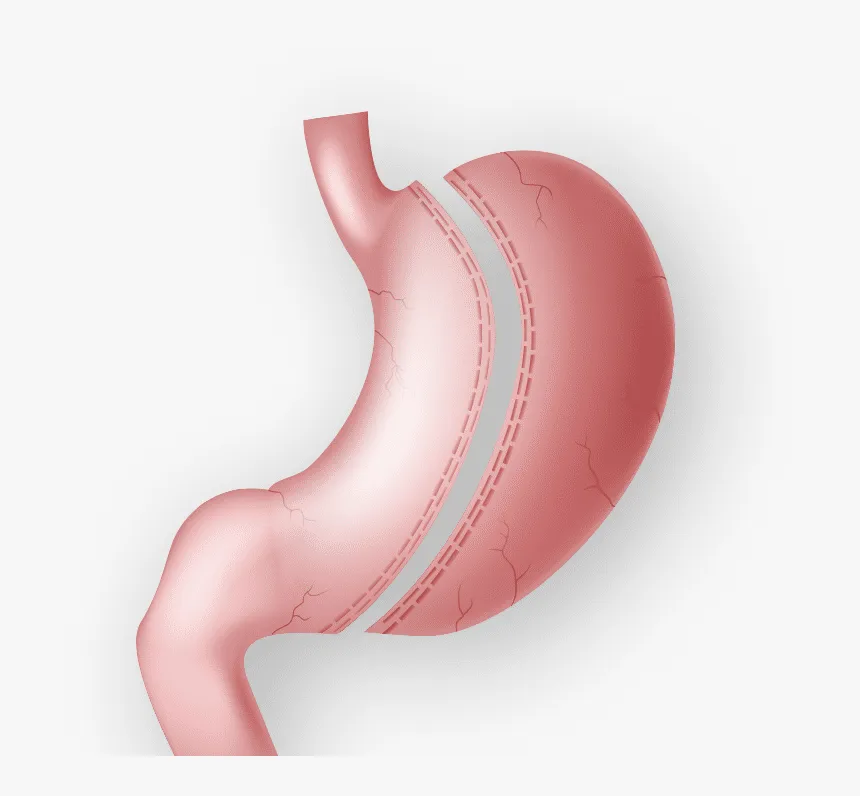
Sleeve gastrectomy is one of the most common starting points for revision worldwide, and reflux is one of the most important drivers for conversion. IFSO material and large cohort studies consistently report that revision after sleeve is most commonly performed for GERD, followed by weight regain or inadequate weight loss.
For patients with objective, medically uncontrolled reflux after sleeve, conversion to Roux-en-Y gastric bypass is the most widely supported revisional option. Consensus statements describe conversion to RYGB as the preferred surgical treatment for uncontrolled GERD after sleeve, and recent studies show meaningful improvement in reflux symptoms and reduced anti-reflux medication use after conversion.
Sleeve-to-Bypass Conversion
Sleeve-to-bypass revision is commonly considered when patients have:
- Persistent GERD or esophagitis despite medical therapy
- Weight regain after sleeve
- Inadequate metabolic response or insufficient weight loss
Recent published data report that GERD is the leading reason for sleeve-to-bypass revision: one large study found GERD was the most common indication at 55.3%, and another reported major improvement in GERD-related quality-of-life scores, with anti-reflux medication use falling substantially at one year after conversion.
At the same time, patients should be told clearly that revisional surgery is not risk-free, and reflux may improve without disappearing completely in every case. Current evidence still describes RYGB as the best-supported option for refractory reflux after sleeve, but some patients continue to have residual reflux symptoms after conversion. For a deeper look at options when a sleeve has failed, read our dedicated guide: Revision Bariatric Surgery: Options When Your Sleeve Has Failed.
Revision After Gastric Bypass
Patients who previously had gastric bypass may need revision for weight regain, recurrence of obesity-related disease, gastrogastric fistula, marginal-ulcer-related issues, strictures, reflux-related symptoms, or anatomical enlargement of the pouch or outlet. Guidance from ASMBS and later reviews supports revision when serious complications cannot be managed medically or when weight-loss failure is linked to persistent disease burden.
In bypass patients, treatment planning depends heavily on anatomy and nutrition. Some patients need outlet or pouch revision, and many with a dilated outlet are excellent candidates for incisionless endoscopic revision instead of repeat surgery:
- TORe (Transoral Outlet Reduction) — endoscopic suturing that tightens a stretched stoma through the mouth, with no incisions and same-day or next-day discharge
- Argon Plasma Coagulation (APC) — a controlled thermal treatment that shrinks a dilated outlet over repeat sessions
Patients with malnutrition or post-bypass hypoglycemia may instead require reconstruction or reversal-oriented correction rather than a more aggressive weight-loss revision.
Evaluation Before Revision: How We Plan Your Surgery
Revision surgery should never be offered blindly. Current evidence supports a structured preoperative work-up that usually includes review of the original operative report when available, endoscopy, contrast imaging when indicated, reflux-focused testing in selected sleeve patients, nutritional blood work, and psychological and dietetic assessment.
Typical Preoperative Assessment
- Detailed weight history: nadir weight, regain pattern, and current eating behavior
- Review of the original bariatric procedure and any prior complications
- Upper GI endoscopy to assess esophagitis, ulcers, sleeve shape, pouch size, fistula, and other anatomical findings
- Contrast swallow or other imaging in selected patients to define anatomy and transit
- pH monitoring and manometry in selected reflux cases after sleeve
- Full nutritional panel: iron, B12, folate, vitamin D, calcium, protein and other deficiencies are corrected before planning surgery
- Psychological evaluation and dietary review to identify factors affecting long-term success
This structured assessment is exactly why revision patients travel to high-volume centers: the diagnosis determines the operation, not the other way around.
Benefits and Limitations
The potential benefits of revisional surgery include additional weight loss, better control of reflux, improvement of obesity-related co-morbidities, correction of technical problems, and better quality of life when the indication is well chosen. The 2022 ASMBS/IFSO statement notes that revisional surgery can be effective for additional weight loss and co-morbidity reduction in selected patients, with low mortality and acceptable complication rates overall.
However, revision surgery has limits. It is more complex than first-time bariatric surgery, results can be less predictable, and outcomes depend heavily on correct procedure choice, patient adherence, anatomy, and long-term follow-up.
Risks of Revisional Surgery
A second bariatric operation generally carries higher technical difficulty and higher complication risk than primary surgery. The ASMBS/IFSO statement explicitly notes increased complexity, longer hospital stay, and higher complication rates in revisional surgery compared with primary procedures.
For example, a major analysis of sleeve-to-bypass conversion found that although the overall complication rate remained low, serious complications were higher than in primary bypass, while 30-day mortality was not significantly different. Revision can be safe and effective — but it must be planned carefully and presented honestly.
Potential Risks May Include
- Leak, bleeding, or infection
- Stricture or ulcer
- Internal hernia or bowel obstruction in bypass-related revisions
- Worsening or persistence of nutritional deficiencies
- Venous thromboembolism
- Incomplete symptom resolution or less weight loss than expected
Recovery and Long-Term Follow-Up
Recovery depends on the procedure performed, your medical condition, and whether the revision was done for reflux, weight regain, or a complication. Most patients need staged dietary progression, structured supplementation, repeat laboratory surveillance, and close follow-up with the bariatric team after surgery. Endoscopic revisions such as TORe typically allow discharge within a day; surgical conversions usually involve a 2–4 night hospital stay and a graded return to normal activity over 2–4 weeks.
Long-term follow-up is especially important after revision because obesity is a chronic disease and nutritional complications may appear months or years later. At Istanbul Bariatric Center, every revision package includes lifetime dietitian support precisely for this reason.
Why Choose Turkey for Revisional Bariatric Surgery?
Turkey has become one of the leading destinations for revisional bariatric surgery among patients from the UK, Europe, and the Middle East. The reasons go beyond price:
- High surgical volume and revision experience: complex reoperative anatomy demands surgeons who perform revisions regularly, not occasionally
- JCI-accredited hospitals: our procedures are performed at Liv Hospital, accredited by Joint Commission International — the same standard used by leading US hospitals
- Full diagnostic work-up on site: endoscopy, imaging, laboratory and anesthesiology evaluation are completed before any final surgical decision
- Cost-effectiveness: all-inclusive packages typically cost a fraction of prices in the UK, Western Europe, or the US — without compromising hospital standards
- Transparent all-inclusive packages: hospital fees, VIP transfers, accommodation, interpreter support and post-operative medications in one price, with no hidden extras
- Structured aftercare: lifetime dietitian follow-up and direct contact with your surgical team after you return home
Revision patients are usually more informed than first-time patients — and more cautious. That is appropriate. When comparing clinics, ask specifically about the surgeon’s revision volume, the preoperative testing protocol, who manages complications, and what follow-up you will actually receive after you fly home.
Frequently Asked Questions
Is revisional bariatric surgery more difficult than primary surgery?
Yes. Revisional surgery is generally more complex because of scar tissue, altered anatomy, and the need to solve a specific failure or complication from the original operation. This is why surgeon experience with revisions specifically matters so much.
Can weight regain after bariatric surgery always be fixed with another operation?
No. Weight regain should first be evaluated to determine whether the main cause is anatomical, behavioral, metabolic, or a combination. Not every patient benefits from surgery — some need medical, nutritional, psychological, or endoscopic treatment instead.
What is the best revision for reflux after sleeve gastrectomy?
For medically refractory GERD after sleeve, conversion to Roux-en-Y gastric bypass is the best-supported revisional surgical option in current consensus statements and recent studies.
Will revision surgery give me the same weight loss as the first operation?
Not necessarily. Revisional surgery can help selected patients achieve significant further weight loss, but results are usually less predictable than primary surgery and depend on anatomy, indication, procedure choice, and adherence to long-term follow-up.
Do I need endoscopy before revision?
In most cases, yes. Endoscopy is used to assess anatomy, esophagitis, ulcers, fistula, sleeve configuration, pouch size, and other findings that may change the surgical plan entirely.
Are there non-surgical revision options?
Yes. For selected patients — particularly bypass patients with a dilated outlet — incisionless endoscopic procedures such as TORe or APC can restore restriction without repeat surgery.
How much does revisional bariatric surgery cost in Turkey?
Costs vary with the procedure and your anatomy, but all-inclusive revision packages in Turkey are typically a fraction of UK, EU, or US prices. Beware of quotes that look unusually cheap: for revisions, the preoperative work-up, hospital standard, and aftercare are what protect you. Contact us for a personalized quote after a free review of your surgical history.
Considering Revision After Sleeve, Band, or Bypass?
A detailed review of your surgical history, endoscopy findings, weight trajectory, and current symptoms will show whether you need medical treatment, endoscopic therapy, or revisional surgery tailored to your anatomy and goals.
Schedule Your Free Online ConsultationRelated Reading
- Revision Bariatric Surgery 2026: Options When Your Sleeve Has Failed
- TORe Procedure: Endoscopic Outlet Reduction for Gastric Bypass Revision
- Argon Plasma Coagulation for Weight Regain
Medically reviewed by Dr. Murat Ustun, Istanbul Bariatric Center. Last updated: July 31, 2026.