Medically reviewed by Op. Dr Murat Üstün, MD, PhD · Updated 11 October 2026
ESG at a Glance
- Technique
- Apollo OverStitch suturing
- Published trial average
- 13.6% average TBWL at 1 year (MERIT)
- Incisions
- None
- Starting price
- £5,700
What your written £5,700 quote should specify
The advertised starting price is not a substitute for a patient-specific quote. Ask the coordinator to confirm the current scope, exclusions and effective date in writing.
- ESG with Op. Dr Murat Üstün using Apollo OverStitch
- Liv Hospital Vadistanbul and its JCI accreditation
- Pre-procedure tests and anaesthetic assessment
- Accommodation, transfers and discharge medicines, if included
- Dietitian-led follow-up and the English operative report
- Extra-night charges and what happens if travel is delayed
- Cancellation, rescheduling and deposit terms
- Who manages complications before and after you return home
- What is excluded and who to contact after returning home
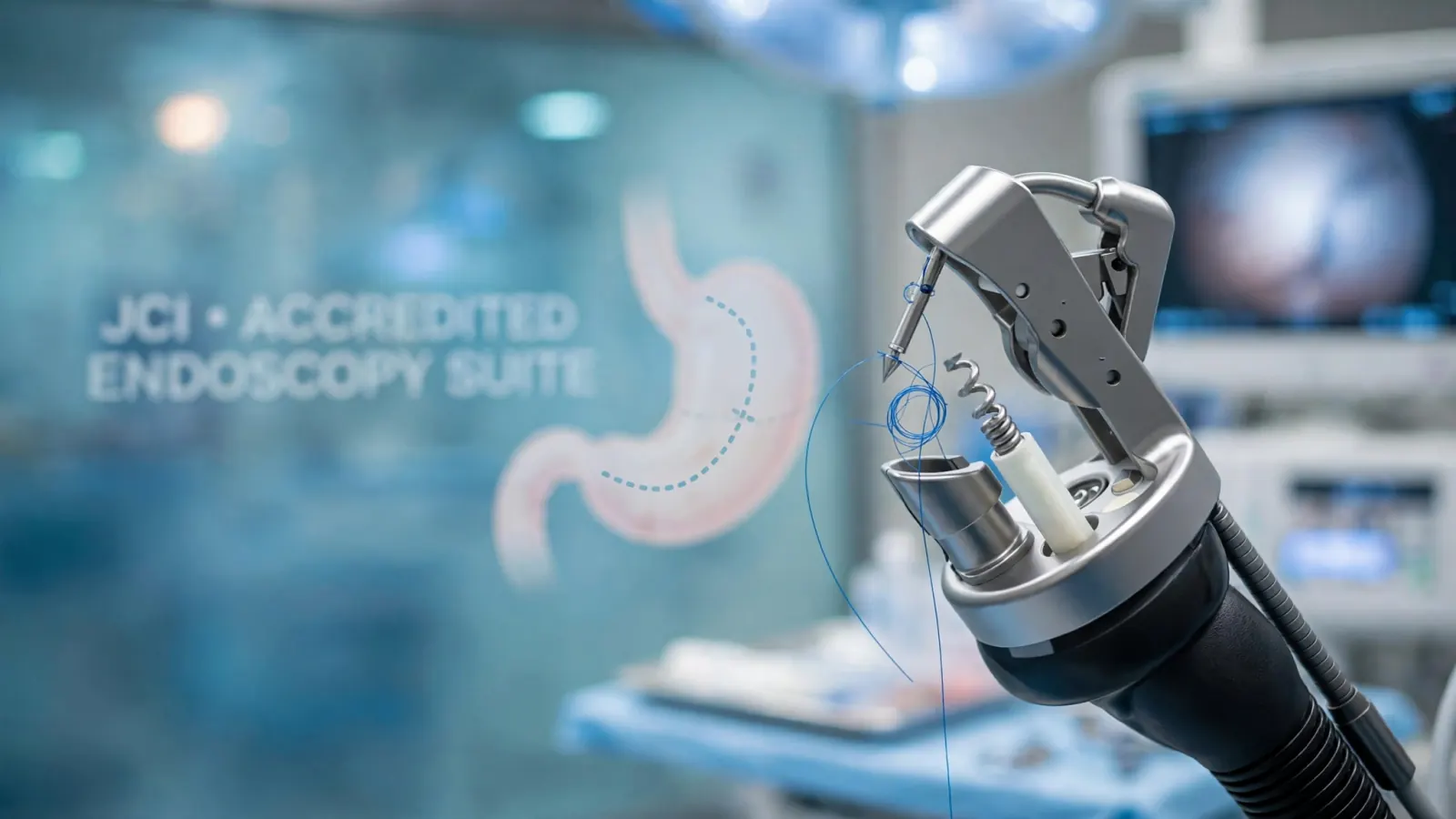
Apollo Endoscopic Sleeve Gastroplasty (ESG) uses the Apollo OverStitch system to reshape the stomach through the mouth with full-thickness sutures. The procedure is performed at JCI-accredited Liv Hospital Vadistanbul in Istanbul.
ESG is performed under general anaesthesia and takes about 60–90 minutes. It does not remove stomach tissue or create abdominal incisions. Patients usually stay one night for observation, and international patients typically plan 4–5 nights in Istanbul.
ESG is commonly assessed in adults with obesity, often with BMI 30 or above. Selected patients outside the usual range may be considered after specialist assessment. Dr Üstün reviews anatomy, medical conditions, medicines, eating patterns, anaesthetic risk and goals before recommending it.

Your typical 5-day ESG trip
- Day 1Arrive in Istanbul, transfer to your hotel and review the plan.
- Day 2Consultation, tests and anaesthetic assessment at the hospital.
- Day 3ESG for about 60–90 minutes, followed by one night of observation.
- Day 4Discharge, medicines and staged liquids while resting at the hotel.
- Day 5Final review and travel clearance before flying home.
The schedule changes when tests, symptoms or the treating team's travel assessment require more time.
ESG Videos and Animation
Endoscopic Sleeve Gastroplasty video 1
Endoscopic Sleeve Gastroplasty video 2
Endoscopic Sleeve Gastroplasty video 3
Endoscopic Sleeve Gastroplasty video 4
ESG vs Gastric Sleeve vs Gastric Balloon
Compare general features only; a clinician must assess which option fits your goals, health and anatomy.
| Criteria | ESG | Gastric Sleeve | Gastric Balloon |
|---|---|---|---|
| Procedure Type | Endoscopic (through mouth) | Laparoscopic surgery (4–5 incisions) | Endoscopic (through mouth) |
| BMI Range | Often assessed from 30; individual selection applies | Thresholds vary by indication and guideline | Product and patient selection vary |
| Expected Weight Loss | 13.6% average TBWL at 1 year in MERIT | Typically more than ESG at 6–24 months | Temporary and variable |
| Procedure Duration | About 60–90 minutes | About 60 minutes | About 20–30 minutes |
| Hospital Stay | Usually 1 night; some same day | Usually 2–3 nights | Usually same day |
| Recovery Time | Desk work often about 1 week | Usually 1–2 weeks for desk work | Often 2–3 days |
| Risk Profile | No incision; nausea, pain, bleeding and rare leak remain possible | Surgical risks include bleeding, leak and reflux | Temporary device with procedure risks |
| Future treatment options | No stomach tissue is removed; revision or conversion may be considered after assessment; reversal is not guaranteed | Stomach removal is permanent | Removal depends on the device |
| Starting Price (Istanbul) | From £5,700 | From £2,450 | From £1,900 |
The named hospital, accreditation scope, surgeon and package inclusions should be confirmed in the written treatment plan.
What Is Reviewed Before ESG?
BMI is one part of the decision. The team also reviews:
- Medical history and current medicines
- Stomach anatomy and previous procedures
- Weight-management goals
- Nutrition and activity plan
- Risks, alternatives and follow-up
- Patient-specific travel planning
Who Is Eligible For Endoscopic Sleeve Gastroplasty?
ESG is commonly assessed in adults with obesity, often with BMI 30 or above, when diet, activity or medication has not produced sufficient lasting weight loss, or when a patient prefers an endoscopic approach. Selected patients outside the usual range may be considered after specialist assessment. BMI is a starting point, not a diagnosis or booking decision.
It may not be suitable with a large hiatal hernia, active ulcer disease, a bleeding disorder, altered upper-GI anatomy, pregnancy or an untreated eating disorder. Dr Üstün reviews the medical history, previous procedures, medicines and ability to follow the staged nutrition plan.
Professional guidelines include selected patients with BMI ≥30 and, for some endoscopic therapies, BMI 27–29.9 with an obesity-related condition. This does not mean every patient in a BMI range is automatically eligible, and a higher BMI may make surgery or another treatment more appropriate.
Important: ESG is one part of a long-term treatment programme. Nutrition support, activity, behavioural support and follow-up are important for maintaining progress, and the care team will tailor these to your health and circumstances.
What Happens Before ESG?
The assessment confirms that ESG is appropriate and that you understand alternatives, risks and limitations. Depending on your history, the team may arrange examinations, laboratory tests and anaesthetic review, then provide individual fasting and medicine instructions.
Tell the team about every prescribed medicine, over-the-counter product, supplement and previous weight-management treatment. Do not stop or adjust medicines using generic website instructions; follow the treating team's plan.
What Is Endoscopic Sleeve Gastroplasty And How Does It Work?
The ESG procedure uses Apollo OverStitch (Apollo ESG system). The device is introduced through the mouth and places full-thickness sutures along the greater curve of the stomach, creating a smaller sleeve-like channel without removing tissue.
The sutures modify the stomach's form, creating a narrower sleeve-like channel. ESG is performed under general anaesthesia to prevent discomfort during the procedure, but it remains an endoscopic treatment with its own risks and recovery.
60–90 min
Procedure duration
1 night
Observation and discharge
No
Incisions Required
Most patients have one night of observation, although selected patients may leave the same day. International patients should usually allow 4–5 nights in Istanbul so tests, observation, early diet progression and travel clearance are not compressed.
Unlike abdominal surgery, ESG does not require abdominal incisions or stomach removal. It still involves general anaesthesia and risks such as pain, nausea, bleeding, fluid collection or a rare leak. No stomach tissue is removed, but revision, suture adjustment or conversion to another treatment is not guaranteed and requires specialist assessment.
Are There Any Risks Or Side Effects?
Endoscopic Sleeve Gastroplasty is performed without abdominal incisions, but it still carries medical risks. In the MERIT trial, 2% experienced a serious ESG-related event; that is a trial result, not the clinic's own complication rate. The study reported no related deaths, intensive-care admissions or surgery for an ESG-related event.
Common early effects include nausea, cramping, abdominal pain, reflux or tiredness. Bleeding, infection, fluid collection and leak are uncommon but urgent symptoms such as severe or worsening pain, persistent vomiting, fever, blood or black stools, chest pain, difficulty swallowing or shortness of breath need immediate medical advice.
When to seek urgent help
- Severe or worsening abdominal pain
- Fever or persistent vomiting
- Unable to keep fluids down
- Blood in vomit or stools
- Chest pain or shortness of breath
- Difficulty swallowing
Recovery, Return to Work and Travel
These are different milestones: hospital discharge, early symptom recovery, return to desk work, return to strenuous activity, diet progression and clearance to fly. They should not be treated as one fixed recovery time.
- Hospital stay: usually one night of observation; selected patients may leave the same day.
- Early recovery: nausea, discomfort and tiredness often need active symptom management during the first week.
- Desk work: often around one week, depending on symptoms and the treating team's advice.
- Strenuous activity and diet: resume only according to the individual plan; normal food textures may take around six weeks.
- Flying home: international patients should usually plan 4–5 nights in Istanbul, with travel clearance from the treating team.
Your discharge plan should state who provides travel clearance, who to contact before departure and after returning home, the next appointment, and which documents to share with your local healthcare team.
Nutrition Advice After Apollo ESG
- 1
Before the procedure
Complete the requested assessment, tests and fasting instructions. The team reviews medicines and explains the anaesthetic plan.
- 2
Weeks 1–2: liquids
Use the prescribed clear and full-liquid plan, small sips and protein support while the stomach begins to heal.
- 3
Weeks 3–5: purée and soft foods
Progress gradually to smooth, puréed and soft textures in small portions, following the dietitian's tolerance and protein targets.
- 4
Around week 6: normal textures
Reintroduce normal textures gradually. Long-term portions, fluids, protein, activity and follow-up determine the durable result.
The dietitian adapts the stages to symptoms, healing and progress. Do not accelerate the diet or fly before the treating team confirms that travel is appropriate.
How Much Weight Loss Can Be Achieved?
Evidence gives a useful range, not a promise. MERIT reported average total body weight loss (TBWL) of 13.6% at one year. In a prospective single-centre cohort of 216 patients, 68 were eligible for five-year follow-up and 82% of those had complete follow-up. Mean TBWL at five years was 15.9%. Ten-year follow-up presented at ACG 2024 reported mean TBWL of 10.5% in a single-centre observational cohort. The overall cohort included 404 patients; 110 were eligible for ten-year follow-up, with 62% complete follow-up. These conference-reported findings are preliminary and do not predict an individual result.
13.6% at 1 year
Published trial average — MERIT randomised trial
15.9% at 5 years
Published trial average — eligible follow-up subset
10-year follow-up
Emerging conference evidence; numerical result requires source verification
These study averages do not predict an individual result. TBWL measures weight lost as a percentage of starting weight; excess-weight loss (EWL) uses a different denominator and must not be treated as the same figure. Weight response depends on starting weight, eating behaviour, activity, medicines, follow-up and medical conditions.
For illustration, 13.6% TBWL from a starting weight of 100 kg means 13.6 kg. It is a mathematical example of a study average, not a personal forecast.
ESG Compared With Obesity Medication
ESG and obesity medication are not a simple winner-versus-loser comparison. They differ in procedural risk, ongoing treatment, side effects, cost, adherence and suitability. Medication may be used instead of ESG or as part of combined care when the prescribing and procedural teams agree on the plan.
ESG
- One endoscopic procedure with general anaesthesia
- No abdominal incisions or stomach tissue removal
- Requires staged nutrition and long-term follow-up
- Results vary and weight regain remains possible
Obesity medication
- Medication-led treatment with prescribing and monitoring
- Side effects, response and affordability vary
- Ongoing use and weight change after stopping need discussion
- May be an alternative or part of a combined plan
Do not use the MERIT lifestyle-control result as if it were a direct comparison with semaglutide, tirzepatide or another medicine; it was not designed as that comparison.
What If Weight Loss Is Too Little or Regain Occurs?
Insufficient weight loss and weight regain are possible after ESG. This does not automatically mean the procedure was performed incorrectly. A review should consider eating patterns, medical factors, medication, follow-up and whether another treatment is appropriate.
Possible next steps may include renewed multidisciplinary support, medication, repeat endoscopic treatment or surgery in selected patients. Repeat ESG and endoscopic revision after previous sleeve surgery are not the same as primary ESG and require individual anatomical assessment.
Evidence and further reading
The figures on this page come from different types of evidence. A randomised trial, observational cohort, guideline and conference report should not be treated as interchangeable.
- MERIT randomised trial — The Lancet
- Five-year ESG outcomes — Gastrointestinal Endoscopy
- NICE guidance HTG711
- ASGE–ESGE guideline
- Mayo Clinic ESG overview
- Johns Hopkins ESG overview
Clinical evidence is general information, not a diagnosis or personal treatment recommendation. Sources and guidance can change; confirm the current position with the treating team.
Why Choose IBC for ESG?
Istanbul Bariatric Center combines specialist expertise, a named JCI-accredited hospital, transparent starting prices and a structured aftercare plan.
Dr Murat Ustun
Op. Dr Murat Üstün, MD, PhD, leads the ESG assessment and treatment plan. He has over 25 years' experience and more than 6,000 advanced laparoscopic procedures; that figure is not an ESG-specific case total.
Named hospital and accreditation
ESG is performed at Liv Hospital Vadistanbul, Istanbul, a JCI-accredited hospital.
Starting from £5,700
Relaxation is currently advertised from £5,700 and Luxury from £6,850. The written quote sets out the named hospital, procedure, accommodation, transfers, aftercare, exclusions and payment terms.
Individual results vary
Published research figures describe study populations, not guaranteed results or IBC's audited outcomes. MERIT reported 13.6% average TBWL at one year; the five-year result was 15.9% in the eligible follow-up subset.
Frequently Asked Questions About ESG in Turkey
Everything you need to know about Endoscopic Sleeve Gastroplasty
What is Endoscopic Sleeve Gastroplasty (ESG)?
Endoscopic Sleeve Gastroplasty (ESG) uses the Apollo OverStitch system to place full-thickness sutures through an endoscope passed through the mouth. The stomach is reshaped without abdominal incisions; it is still a medical procedure requiring an individual assessment.
How much does ESG cost in Turkey?
The current advertised starting prices are £5,700 for Relaxation and £6,850 for Luxury at Liv Hospital Vadistanbul. Your written quote confirms the procedure, accommodation, transfers and aftercare arrangements.
What is the recovery time after ESG?
The procedure takes about 60–90 minutes under general anaesthesia. Patients usually stay one night for observation, although some may leave the same day. Desk work is often possible in about one week; travel and activity are set for the individual patient.
How much weight can I lose with ESG?
In the MERIT randomised trial, average total body weight loss was 13.6% at one year. In a prospective single-centre cohort of 216 patients, 68 were eligible for five-year follow-up and 82% of those had complete follow-up. Mean TBWL at five years was 15.9%. Ten-year follow-up presented at ACG 2024 reported mean TBWL of 10.5% in a single-centre observational cohort. The overall cohort included 404 patients; 110 were eligible for ten-year follow-up, with 62% complete follow-up. These conference-reported findings are preliminary and do not predict an individual result.
Who is a good candidate for ESG in Turkey?
ESG suitability is assessed individually. BMI, medical conditions, stomach anatomy, previous treatment, anaesthetic risk, goals and follow-up requirements influence the recommendation. Patients outside IBC's usual treatment range require specialist assessment. Dr Üstün reviews medical history, anatomy, medicines, eating patterns, anaesthetic risk and goals.
Is ESG safer than gastric sleeve surgery?
ESG avoids abdominal incisions and stomach removal, but it is not risk-free and is not automatically safer for every patient. In MERIT, 2% experienced a serious ESG-related adverse event, with no deaths, ICU admissions or surgery for an ESG-related event; risks and alternatives still need clinical discussion.
How long should I stay in Istanbul after ESG?
Most international patients plan about 4–5 nights in Istanbul. The exact schedule depends on tests, the procedure, observation, diet progression and the treating team's clearance to travel.
What can I eat after ESG?
The usual progression is liquids for about two weeks, purée or soft foods for about two to four weeks, then normal textures around week six. The dietitian adjusts the timing, portions and protein plan to the patient.
Is ESG approved in the UK?
Yes. In February 2024 NICE recommended endoscopic sleeve gastroplasty as an option to treat obesity in adults (HealthTech guidance HTG711).
ESG Procedure — Available for Patients Worldwide
Find ESG information tailored to your country with local pricing, travel details and patient stories
Get Endoscopic Sleeve Gastroplasty in Turkey
Contact Dr Murat Ustun today for a free consultation to learn if Apollo Endoscopic Sleeve Gastroplasty is right for you.