    Assessment-led preview — availability and clinical approval pending

    RESET® Treatment in Istanbul: An Endoscopic Option for Obesity and Metabolic Health

    RESET® is a removable endoscopic intestinal liner described for use alongside lifestyle and medical care. This guide explains how the device works, who may need assessment, what the evidence reports, what risks require attention and why planned removal and follow-up matter.

    Updated 15 October 2026. This is educational content, not a diagnosis, prescription or guarantee of treatment availability.

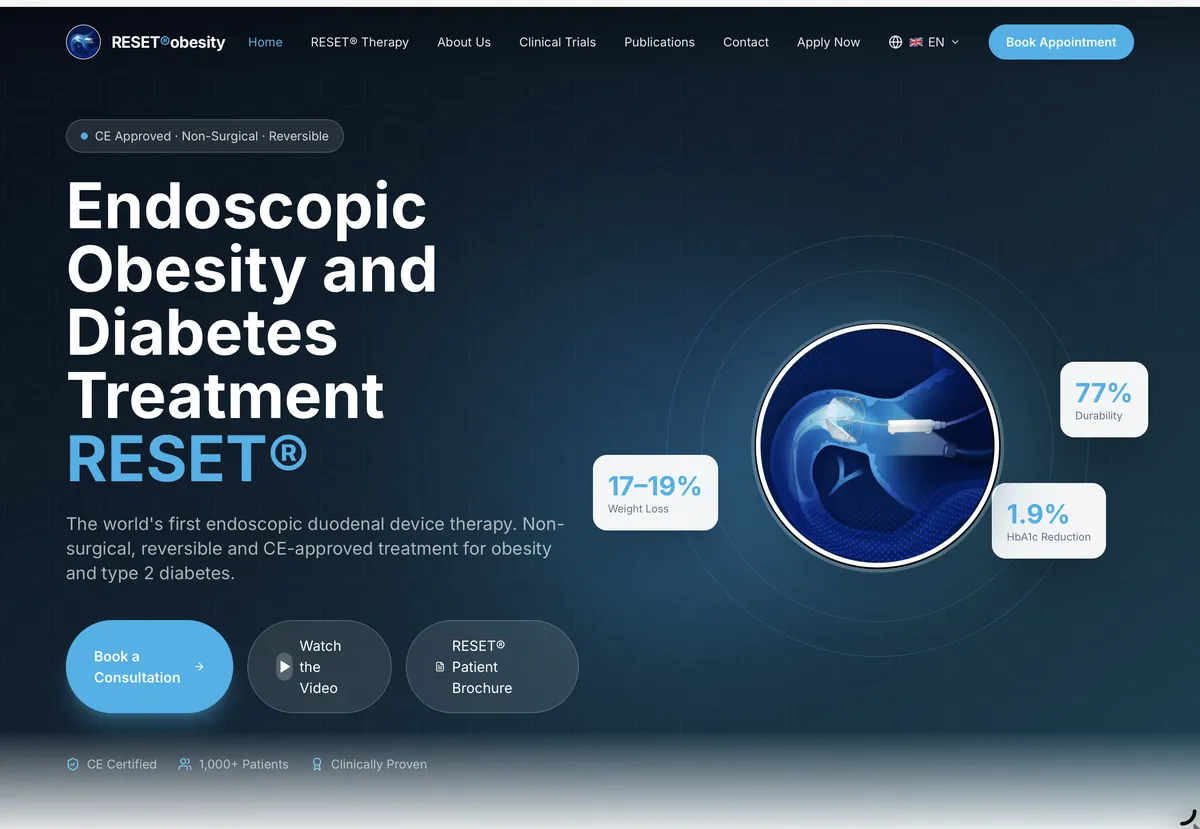
    RESET endoscopic treatment reference visual supplied with the project materials
    Supplied reference visual. It does not confirm that the procedure is currently available at Istanbul Bariatric Center.

    At a glance

    What is RESET® treatment?

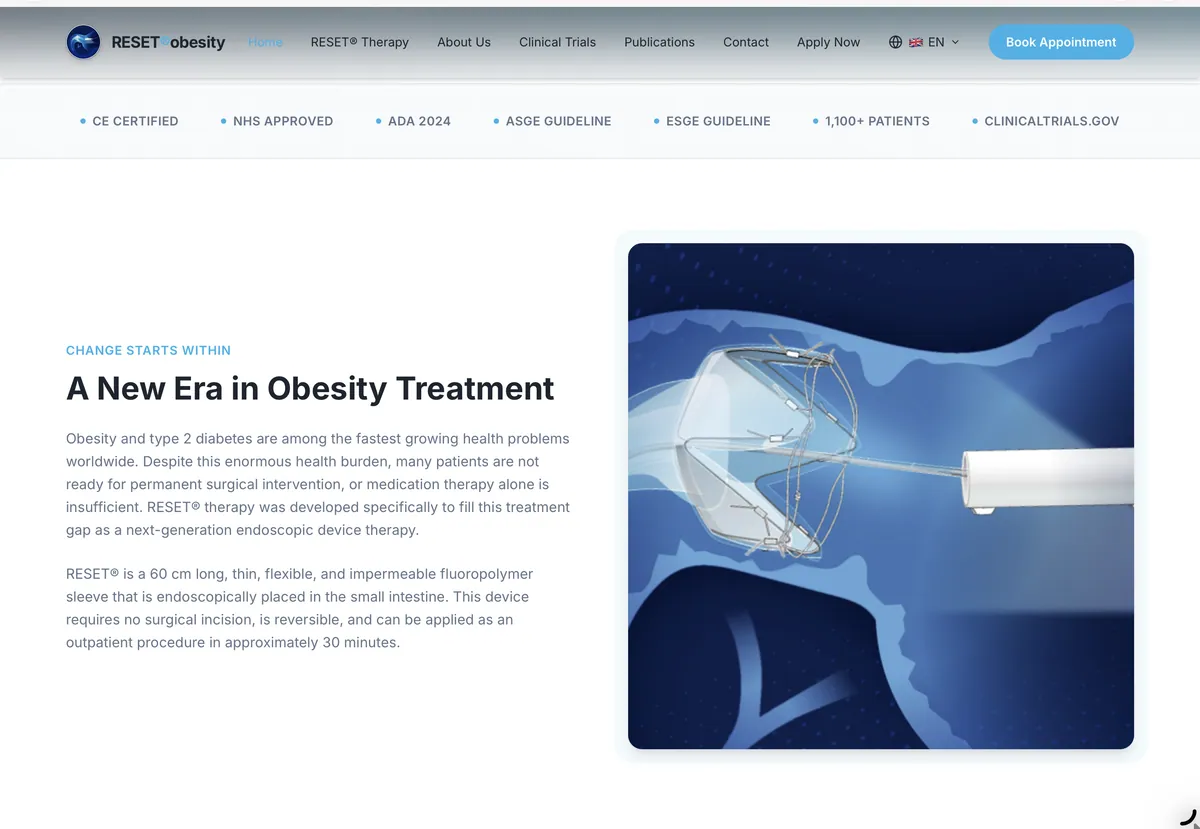
    RESET® is a thin, flexible, approximately 60 cm fluoropolymer liner that is placed in the upper small intestine rather than inside the stomach. The device is designed to anchor near the beginning of the small intestine, conform to intestinal movement and create a temporary barrier between ingested nutrients and the intestinal lining. It is introduced and later removed through the mouth with an endoscope while the person follows a supervised diet, lifestyle and medical programme.

    The important distinction

    This is not gastric bypass surgery and it is not a permanent implant. It does not remove part of the stomach, and it should not be described as a cure for obesity or type 2 diabetes. The benefit-risk decision depends on current device instructions, the person’s medical history, local regulatory status and reliable follow-up.

    Endoscopic placement
    No routine abdominal incision
    Planned removal
    Supervised metabolic care
    Anatomical reference showing a RESET intestinal liner positioned in the upper small intestine

    How food passes through a duodenal-jejunal bypass liner is a simplified educational explanation. The treating team should explain the device supplied for your care and its current instructions for use.

    RESET® quick facts

    QuestionKey information
    What is it?A thin, flexible intestinal liner approximately 60 cm long.
    Where does it work?In the upper small intestine, rather than inside the stomach.
    How is it placed?Endoscopically through the mouth, usually under general anaesthesia.
    Does it require incisions?No abdominal incisions are needed for routine placement.
    How long does treatment last?No longer than 9 months under the supplied manufacturer guidance.
    Is removal necessary?Yes. Planned removal is an essential part of treatment.

    Clinical assessment

    Who might be assessed for RESET®?

    RESET® is not suitable for everyone. The supplied materials describe a structured assessment rather than a simple BMI threshold. A clinician must review the current instructions for use, local requirements, medical risks, ability to follow the programme and the availability of planned removal before making a recommendation.

    The assessment considers

    • Age, BMI and metabolic history, including type 2 diabetes and cardiometabolic risk.
    • Previous stomach, duodenal or intestinal surgery and any altered anatomy.
    • Liver, kidney, pancreatic, gastrointestinal and bleeding history.
    • Current medicines, including antithrombotic treatment and medicines that affect motility, weight or bleeding.
    • Ability to chew thoroughly, drink at least 1.5 litres daily when permitted, follow staged eating and attend follow-up.
    • Pregnancy, planned pregnancy, travel plans and the practical ability to access urgent care or removal if required.

    Situations requiring particular caution

    • The supplied patient information reports limited or absent data for people younger than 21 or older than 65 and for BMI above 55.
    • Pregnancy or planned pregnancy is not compatible with proceeding without specialist advice.
    • Potential exclusions include previous gastrointestinal surgery or abnormal anatomy, liver disease, renal disease, pancreatitis, Crohn’s disease, stenosis, ulcers, varices, poor dentition and active or recent severe reflux.
    • The booklet also lists anaemia, bleeding disorders, uncontrolled thyroid disease, type 1 diabetes or diabetic ketoacidosis, H. pylori, selected infections, metal sensitivity, relevant allergies and some medicines as issues requiring clinician review.
    • A psychological, dietary and practical assessment is important because the liner does not replace long-term behaviour, medication or metabolic follow-up.

    The list is not a substitute for a clinician’s assessment. Never stop or change a medicine without the prescriber’s direction.

    How it works

    Placement uses an endoscope, not an abdominal incision

    The clinician passes an endoscope through the mouth and positions the anchored liner in the upper small intestine. The manufacturer describes an outpatient approach without incisions; the supplied patient booklet describes general anaesthesia, same-day discharge in many cases and a planned endoscopic removal. The exact setting, anaesthesia plan and timing must be confirmed in an individual clinical plan.
    1. 1

      Assessment and clearance

      Medical, dietary, anaesthetic and practical checks are completed before a decision is made.

    2. 2

      Endoscopic placement

      The liner is introduced through the mouth and secured near the start of the small intestine under the agreed anaesthesia plan.

    3. 3

      Supervised treatment and removal

      Follow-up supports diet, hydration, symptoms and metabolic monitoring; planned removal is essential and must not be missed.

    This video is supplied for general education. External video content is not a personal medical recommendation and does not confirm local availability.

    Patient journey

    From consultation to planned removal

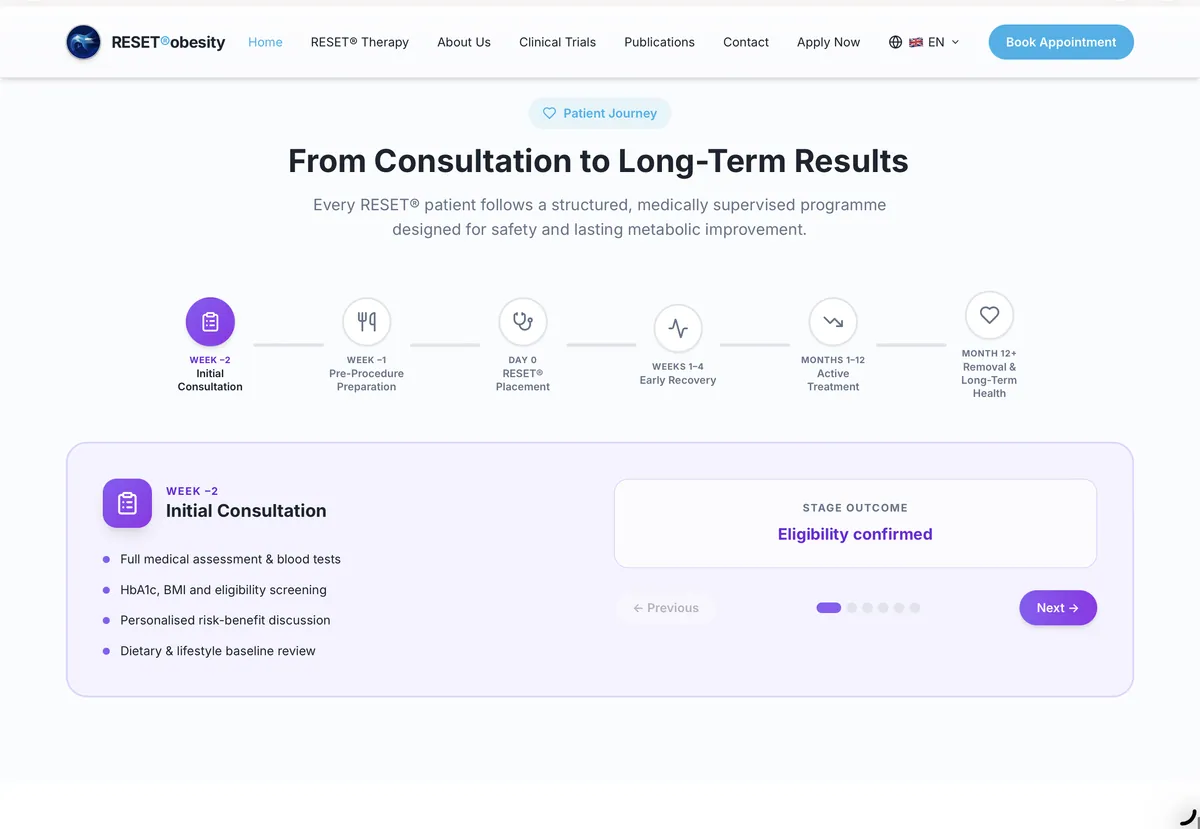
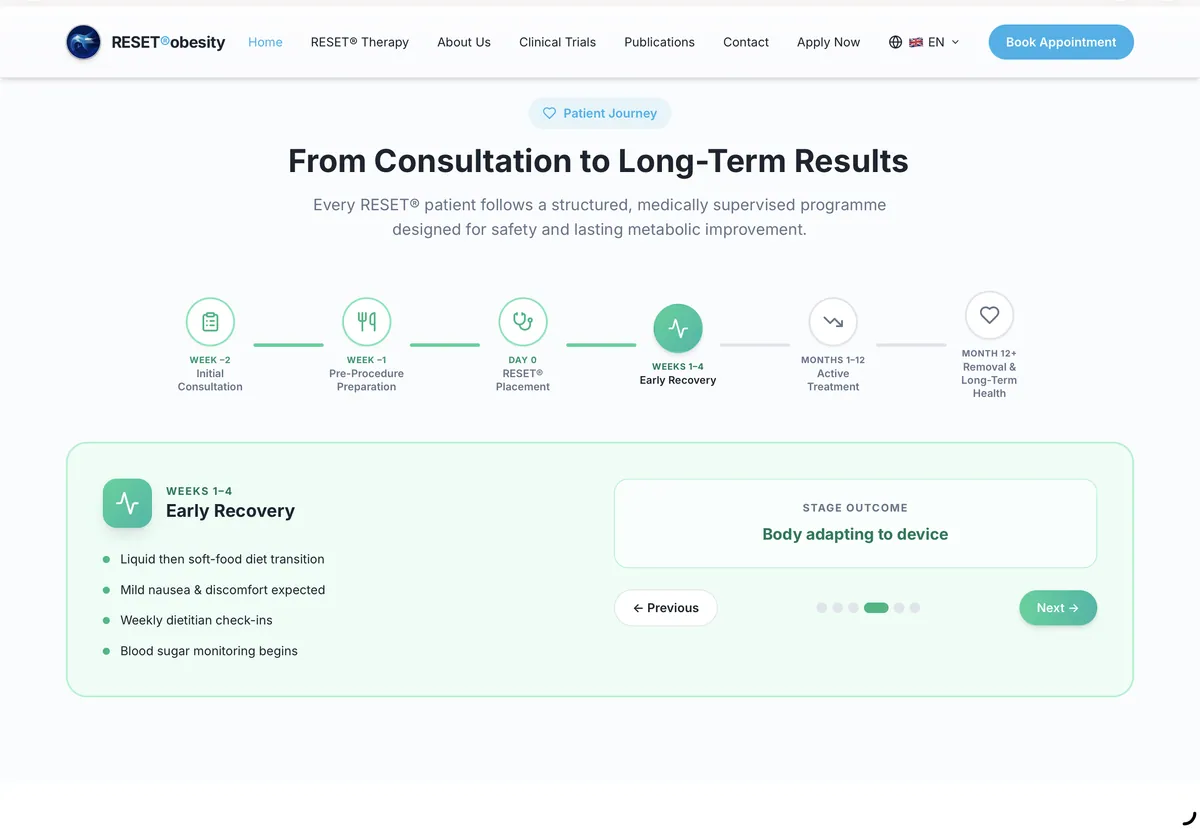
    The supplied reference sequence presents a staged journey. It is an educational visual, not an Istanbul Bariatric Center protocol or a promise of timing. Your clinician should provide the actual pathway in writing.
    Supplied RESET treatment journey reference showing the initial consultation stage

    Step 1 · Before placement

    Consultation, tests and preparation

    The assessment reviews your history, examination, blood tests, medicines, anatomy, metabolic goals and ability to complete the programme. The clinical team confirms whether the current instructions for use permit treatment.
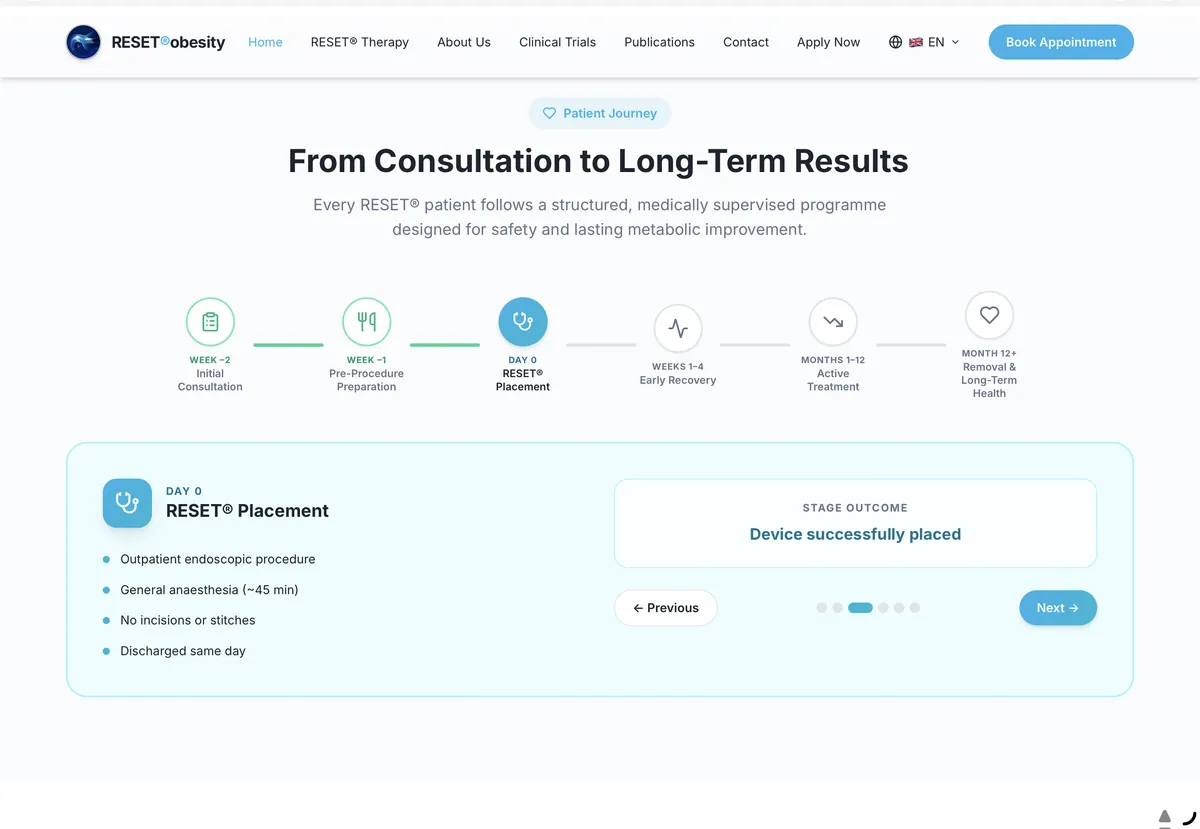
    Supplied RESET treatment journey reference showing endoscopic placement

    Step 2 · Placement

    Endoscopic RESET® placement

    The liner is introduced through the mouth with an endoscope and positioned in the upper small intestine. The supplied materials describe routine placement without abdominal incisions, usually under general anaesthesia.

    Supplied RESET treatment journey reference showing early recovery

    Step 3 · After placement

    Staged recovery and supervised treatment

    The early diet progresses from liquids to pureed or soft foods and then to regular textures only when the treating team permits. Follow-up checks symptoms, hydration, nutrition, medicines, metabolic markers and the plan for removal.

    Recovery and follow-up

    The first two weeks are staged, not routine

    The patient booklet describes a liquid phase for days 1–7, a puree or soft-food phase for days 8–14 and gradual progression afterwards. Nausea, discomfort, cramping, vomiting and fatigue can happen. Some people resume normal activity in two or three days; others need a week or longer.

    Days 1–7

    Liquid phase

    The supplied booklet describes a liquid diet with nutritional support. Nausea, cramping, discomfort and vomiting can occur; the actual plan must be individualised.

    Days 8–14

    Puree or soft phase

    Move to pureed or soft foods only as directed, chew carefully and monitor hydration and symptoms.

    Day 14 onward

    Gradual texture progression

    A return to regular textures is gradual and clinician-led. Avoid foods that conflict with the device guidance, including coarse, stringy or hard-to-chew foods.

    Up to 9 months

    Active treatment and follow-up

    The supplied manufacturer guidance sets a maximum implant duration of 9 months. A removal appointment should be planned; the device must not be left in place indefinitely.

    Travel and medicines

    Before travelling, ask for a written follow-up and emergency plan, carry the device identification information and confirm where removal or urgent endoscopy would be available. The booklet warns against NSAIDs unless the treating clinician specifically advises otherwise. Follow the prescribing team’s instructions for acid-reducing medicines, diabetes medicines and every other medication.

    Published evidence

    What has been reported so far

    The figures below are group-level results from supplied materials and published registry evidence. They are not a forecast for an individual, and they do not establish that the device is suitable or available in Istanbul.
    OutcomeReported average changePatients with paired measurements
    Body weightReduction of 13.3 kg811
    HbA1cReduction of 1.3 percentage points646

    1,022

    patients in the worldwide registry

    4.2%

    serious adverse-event rate reported in that registry

    9 months

    maximum implant duration in the supplied guidance

    Published data can have selection, follow-up and reporting limitations. Ask which device, protocol, population, follow-up duration and outcome definition apply to any number quoted during a consultation.

    Newer manufacturer-reported registry update

    A September 2025 Morphic Medical announcement described a larger real-world registry than the 1,022-patient dataset above. These figures are reported by the device manufacturer and should be checked against the underlying presentation or publication before being used to make an individual decision.

    1,298 patients

    A 2025 manufacturer announcement described a real-world registry across 37 centres in 12 countries.

    18.9% average total body-weight reduction

    The same announcement reported this group-level average; it is not a personal forecast.

    1.3 percentage-point HbA1c reduction

    The reported average change was greater in people who started with higher HbA1c.

    77% maintained improvement at 3 years

    The announcement described maintenance after removal, but follow-up populations and definitions still need review.

    Nine-month protocol

    The manufacturer described a nine-month approach as delivering the reported benefits with fewer complications than a 12-month approach.

    Regulatory and regional context

    A CE mark is not the same as Turkish registration

    Device status, permitted use and availability depend on the country where treatment takes place. The manufacturer's EU site reports a CE mark announcement in July 2025 and describes commercial launch in the European Union and other geographies that recognise CE marking. That does not by itself confirm Turkish registration, supply at this centre or approval for your individual treatment.

    Europe and Türkiye

    Morphic's regional information presents RESET® as a device intended as an adjunct to lifestyle and/or medicines for obesity with at least one cardiometabolic risk factor, such as type 2 diabetes or dyslipidaemia. Turkish legal status and centre-specific supply still require separate confirmation.

    United States

    The manufacturer's US information describes RESET® as investigational and links it to the STEP-1 clinical study. US study criteria, regulatory language and trial participation requirements must not be applied as an Istanbul eligibility rule.

    Use the correct literature

    Morphic's device-literature portal says product information varies by geography and should match the country where the procedure occurs. Ask for the current Türkiye-specific instructions for use, patient information and emergency guidance before proceeding.

    Safety first

    RESET® treatment risks must be discussed clearly

    Any endoscopic device therapy can cause serious complications. In the worldwide registry described in the supplied materials, 43 serious adverse events occurred among 1,022 patients (4.2%). The reported events included gastrointestinal bleeding, liver abscess, pancreatitis and cholecystitis. The booklet reports no deaths in that registry, but severe injury or death remains possible with serious complications.

    Possible risks include

    • Pain, nausea and vomiting
    • Bleeding or gastrointestinal haemorrhage
    • Liner migration or obstruction
    • Pancreatitis or cholecystitis
    • Infection or liver abscess
    • Early removal or surgical intervention

    Seek urgent medical help for

    Worsening or severe abdominal pain, fever, right-upper-quadrant pain or chills, persistent or severe nausea and vomiting, severe diarrhoea, bloody vomit, black stools, dizziness, confusion or fainting.

    Do not wait for a routine clinic reply. Contact local emergency services or the nearest emergency department and tell them that you have an intestinal liner.

    Compare options

    RESET® versus gastric bypass and other treatments

    RESET® is removable and works in the upper intestine. Gastric bypass is an established operation that changes the stomach and intestinal pathway with permanent anatomy. ESG reshapes the stomach endoscopically, while sleeve gastrectomy removes part of the stomach. These are not interchangeable procedures.
    QuestionRESET®Gastric bypassESG / sleeve
    AnatomyRemovable liner in upper small intestinePermanent stomach and intestinal reconstructionESG reshapes stomach; sleeve removes stomach tissue
    AccessEndoscopic placement and removalLaparoscopic surgeryESG endoscopic; sleeve laparoscopic
    Main commitmentDiet, monitoring and planned removalLifelong nutritional monitoring and supplementsLong-term dietary and metabolic follow-up
    Evidence questionDevice-specific data and local status require checkingEstablished procedure with a different risk and benefit profileDifferent evidence, indications and risks

    International patient planning

    Questions to resolve before travelling to Istanbul

    Request written answers before paying a deposit or arranging flights. A safe plan covers the device, team, hospital, removal pathway, follow-up and what happens if symptoms develop after you return home.
    Which exact RESET® device is being considered, and can the current instructions for use be shared?
    Is the device registered and legally supplied for this use in Türkiye, and who is responsible for confirming that status?
    Who will place and remove it, what is their relevant endoscopic experience, and who provides anaesthesia?
    Where will planned removal take place, and what is the contingency plan for urgent removal or complications?
    What is included in follow-up, blood monitoring, dietetic support and communication after returning home?
    What information should be shown to an emergency clinician, including the patient identification card and device details?

    Answers for patients

    RESET® treatment FAQs

    These answers distinguish published device information from a personal recommendation. They are written for education and must be confirmed against the current instructions for use and your clinician’s advice.

    About RESET®

    What is RESET® treatment?

    RESET® is a removable, approximately 60 cm fluoropolymer liner placed endoscopically in the upper small intestine. It is intended to be used with lifestyle and medical care, not as a stand-alone cure for obesity or diabetes.

    Is RESET® the same as EndoBarrier or a duodenal-jejunal bypass liner?

    They are related concepts: each uses a liner in the upper intestine to alter nutrient contact. The exact device, anchoring system, evidence, instructions for use and regulatory status must be checked for the product being considered. Do not assume data from one device automatically apply to another.

    Is RESET® surgery?

    Routine placement and removal are endoscopic procedures through the mouth and do not require abdominal incisions. They still require anaesthesia, trained clinicians, medical assessment and a plan for managing complications or early removal.

    Eligibility and preparation

    Who might be assessed for RESET® in Istanbul?

    A person with obesity or cardiometabolic risk may request an assessment, but eligibility is individual. The clinician must confirm anatomy, comorbidities, medicines, current instructions for use, local availability and the ability to complete diet and follow-up before treatment can be discussed as an option.

    What happens before placement?

    The programme may include medical history, examination, blood tests, metabolic assessment, medication review, anaesthetic review, diet and lifestyle planning, and endoscopic or other investigations when clinically indicated.

    Recovery and results

    How long is the recovery after RESET® placement?

    Some people return to routine activity in two or three days, while others need a week or longer. Early nausea, discomfort, cramping and vomiting are possible. The staged liquid, soft-food and texture-progression plan is clinician-led.

    What results have been reported?

    In a worldwide registry of 1,022 patients, paired measurements reported an average body-weight reduction of 13.3 kg among 811 patients and an HbA1c reduction of 1.3 percentage points among 646 patients. These are reported group averages, not a prediction for an individual.

    Safety, removal and availability

    What are the risks of RESET® treatment?

    Risks include pain, nausea, vomiting, bleeding, migration, obstruction, pancreatitis, infection, liver abscess, cholecystitis and early removal. The registry reported 43 serious adverse events among 1,022 patients (4.2%). Severe injury or death is possible with serious complications, so urgent symptoms need immediate medical attention.

    Does RESET® need to be removed?

    Yes. Planned removal is essential and the supplied manufacturer guidance limits implantation to no longer than 9 months. Removal is performed endoscopically unless a complication requires a different approach.

    Is RESET® available to book in Türkiye?

    Availability, Turkish registration, centre-specific supply, team competence and clinician approval must be confirmed before any treatment is presented as bookable. This page is an assessment-led educational preview, not a promise that Istanbul Bariatric Center currently offers the device.

    Publication status

    Request an assessment, not a promise

    Istanbul Bariatric Center can collect your questions and medical background for an assessment-led discussion. Local registration, supply, centre-specific availability, treating-team competence and genuine clinician approval must be confirmed before RESET® can be described as a bookable service.

    Request a clinical assessment

    Sources and further reading

    1. Morphic Medical, RESET® Endoscopic Device Therapy Patient Information Booklet, supplied copy dated 2025, document LA-0007-01-EN. The uploaded booklet is summarised here; no public download link is implied.
    2. Morphic Medical: RESET® device information
    3. Morphic Medical EU: RESET® overview, mechanism and removal information
    4. Ryder et al., Diabetes Care 2023: worldwide EndoBarrier registry data
    5. Ryder et al., British Journal of Diabetes 2022: four-year NHS EndoBarrier follow-up
    6. Morphic Medical CE-mark announcement, 2025
    7. Morphic Medical: 2025 real-world registry announcement (1,298 patients)
    8. Morphic Medical device literature portal: select the country-specific information
    Medical disclaimer: This page is for general education. It does not diagnose, prescribe, replace a consultation or guarantee eligibility, results, safety or availability. Decisions must follow the current device instructions for use and an appropriately qualified treating team.